Friday, October 3, 2014

"Ten-Ten-Ten": The Dog that found a home

Dr Abe V Rotor

Jemille and Ten-ten-ten
It was a quiet afternoon and guess who was knocking at the gate?
A starving dog, a mongrel, and what is there in him to gain?  
Could you spare me a morsel? His eyes moist and sad, begging,
And food we gave, closed the gate, everything was quiet again.  

The sun was setting down, we saw a shadow seeping through the gate,
He is still there, I told the children, and he was knocking again, 
Could you spare me a place for the night? His moaning told us so,
Who are you, who is your master? Silence. I felt a little pain.   

We took him in.  It was a special date on the calendar that comes
But once, and never again, not in a lifetime or generation.
Tenth day, of the tenth month, of the first decade of the millennium,   
And we named this lost dog Ten-ten-ten. What a celebration!  

Home he found and a happy company with us and the neighborhood,
Call his name, you wish luck and fortune, how easy to remember! 
And children tired from school come knocking to play with their friend,
Can we play with Ten-ten(-ten)? Heaven sent a dog to love and share.  ~

30 pesticide-free vegetables. How many can you identify?


In general, leafy vegetables (e.g. pechay) and fruit vegetables (e.g. tomato) receive more chemical spraying than do root (potato) and seed (mungo) vegetables. On the aspect of pesticide application, vegetables are classified into two: those that do not need spraying at all, and those which can not be raised economically without chemical protection.
Dr Abe V Rotor

Living with Nature School on Blog
Paaralang Bayan sa Himpapawid (People's School-on-Air) with Ms Melly C Tenorio
738 DZRB AM Band, 8 to 9 evening class, Monday to Friday
Himbaba-o or alukong Ilk; papait (Mollugo oppositifolia)

 Assorted native vegetables: patani, himbaba-o, eggplant
Talinum, alugbati

Dampalit, bagbagkong
Edible fern (pako'), saluyot

This lesson was aired in a series of radio broadcast on Paaralang Bayan sa Himpapawid (People's School-on-Air) on DZRB 738 KHZ and [www.pbs.gov.ph] This also serves as reference in Economic Botany, a three-unit subject offered at the UST Graduate School and De La Salle University,

The purpose of this lesson is to promote home gardening nationwide and worldwide in response to three crucial issues affecting our society today.

The first is to build natural body resistance against the current pandemic of A(H1N1) or swine flu through the consumption of more fruits and vegetables.

The second is to promote a bottom-up approach of providing alternative sources of food through people's initiative to produce food and reduce food cost and increase the level of nutrition to cushion the effects of the worsening global economic crisis.

The third is to reduce the incidence of slow poisoning as a result of the accumulation of pesticide residue in the body. Vegetables and fruits are the principal carriers of residual poison from chemical spraying which leads to the development of many ailments, such as cancer and impairment of the senses and loss of control of the nervous system.

In general, leafy vegetables (e.g. pechay) and fruit (tomato) vegetables receive more chemical spraying than do root (potato) and seed (mungo) vegetables. On the aspect pesticides, I would rather classify vegetables into two: those that do not need spraying at all, and those which can not be raised economically without the protection of chemicals.

For the first category here is a list of 30 common vegetables in their common and scientific names. Farmers simply find them resistant to insects, mites, nematodes, snails, fungi, including weeds, rodents and birds. These vegetables may also be found in the wild, or in the open spaces.

1. Malunggay (Morinda oleifera)
2. Saluyot (Corchorus olitorius)
3. Wild ampalaya (Momordica charantia)
4. Katuray (Sesbania grandiflora)
5. Batao (Dolichos lablab)
6. Patani (Phaseolus lunatus)
7. Sinkamas (Pachyrisus erosus)
8. Summer squash (Cucurbita maxima)
9. Native eggplant (round) - (Solanum melongena)
10. Native tomato (susong kalabaw) - (Lycopersicum esculentum)
11. Native sitao (short) – (Vigna sesquipedalis)
12.Seguidillas (Psophocarpus tetragonolobus)
13.Alugbati (Basella rubra)
14.Talinum (Talinum triangulare)
15.Native spinach (Amaranthus sp.)
16.Gulasiman (Portulaca oleracea)
17.Sweet potato (tops and root) (Ipomea batatas)
18. Kangkong (Ipomea reptans)
19. Pepper or Sili (labuyo) (Capsicum frutescens)
20. Ginger (Zingiber officinale)
21. Rimas or breadfruit (Artocarpus altilis)
22. Sayote (Sechium edule)
23. Taro or gabi (Colocasia esculenta)
24. Kamoteng kahoy or cassava (Manihot esculenta)
25. Ubi (Dioscorea alata)
26. Tugui’ (Dioscora esculenta)
27. Kadios (Cajanus cajan)
28. Banana (Saba) (Musa paradisiaca)
29. Sampaloc (Tamarindus indica)
30. Kamias (Averrhoa bilimbi)

There are many other vegetables classified under the same category. These include alukong or himababa-o, bagbagkong, papait, sampaloc (flowers, tips and young pods), flowers of madre de cacao or kakawate.

Reference: The Living with Nature Handbook by AV Rotor, UST Publishing House, Manila

Happiness is... according to four Nobel Prize Laureates


Happiness is, to great men and women, a motivating force to achievement and not its own result; of making others and not oneself feel happy and successful, of being treated fairly, of being cared for; of reaching out for a cause with great determination, and whether one succeeds or not, finds fulfillment at the end. Happiness is... what makes this world a better place to live in - indeed a mark of greatness of anyone who can contribute to it in his or her own way.~


Dr Abe V Rotor

Happiness is a mental or emotional state of well-being characterized by positive or pleasant emotions ranging from contentment to intense joy. A variety of biological, psychological, religious, and philosophical approaches have striven to define happiness and identify its sources. Various research groups, including positive psychology, endeavor to apply the scientific method to answer questions about what "happiness" is, and how it might be attained.

The smiley face is a well-known symbol of happiness
It is of such fundamental importance to the human condition that "life, liberty and the pursuit of happiness" were deemed to be unalienable rights by the United States Declaration of Independence.

The United Nations declared 20 March the International Day of Happiness to recognize the relevance of happiness and well being as universal goals. In 2014 Happy (Pharrell Williams song) became the anthem and inspired clips from around the world. (Happiness From Wikipedia, the free encyclopedia)
Albert Einstein, Man of the 20th century, was always in jovial mood while at work.  Here he plays a violin before delivering a lecture. 
 What is happiness to great people? Do they perceive the kind of happiness most people feel? Or do they have a world of their own too, when it comes to enjoying life?

Or, if their being unique and not understood in many ways, is the barrier - what then is happiness to them? Is there still a place of happiness in their genius?

Let's take it from some great figures of the world.

1.  Happiness is... according to Albert Schweitzer
  • Success is not the key to happiness. Happiness is the key to success . if you love what you are doing, you will be successful.
  • I don't know what your destiny will be, but one thing I do know: the only ones among you who will be really happy are those who have sought and found how to serve.
2. Albert Schweitzer was a Franco-German theologian, organist, philosopher and physician. He received the 1952 Nobel Peace Prize for his philosophy of Reverence for Life. His passionate quest was to discover a universal ethical philosophy, anchored in a universal reality, and make it directly available to all of humanity. He founded the famous Albert Schweitzer Hospital in Lambarene' in Gabon, then French Equatorial Africa.

3. Happiness is... according to Albert Camus
  • You will never be happy if you continue to search for what happiness consists of. You will never live if you are looking for the meaning of life.
  • But what is happiness except the simple harmony between a man and the life he leads?
  • All men have a sweetness in their life. That is what helps them go on. It is towards that they turn when they feel too worn out.
Albert Camus was a French Algerian author, philosopher, journalist and footballer who was awarded the Nobel Prize for Literature in 1957 "for his important literary production, which with clear-sighted earnestness illuminates the problems of the human conscience in our times". He was a key philosopher of the 20th-century and his most famous work is the novel L'Étranger (The Stranger), and for his writings against capital punishment in the essay Réflexions sur la Guillotinehis views contributed to the rise of the more current philosophy known as absurdism. He wrote in his essay The Rebel that his whole life was devoted to opposing the philosophy of nihilism while still delving deeply into individual freedom..
4. According to the Dalai Lama

  • The basic thing is that everyone wants happiness, no one wants suffering. And happiness mainly comes from our own attitude, rather than from external factors. If your own mental attitude is correct, even if you remain in a hostile atmosphere, you feel happy.
  • If you want others to be happy, practice compassion. If you want to be happy, practice compassion.
  • When we feel love and kindness toward others, it not only make others feel loved and cared for, but it helps us also to develop inner happiness and peace.
His Holiness the XIVth Dalai Lama, Tenzin Gyatso, is the spiritual and temporal leader of the Tibetan people. Tibetans normally refer to His Holiness as Yeshin Norbu, the Wish-fulfilling Gem, or simply, Kundun, meaning The Presence. He received the Nobel Peace Prize in 1989 for his unwavering leadership in leading the Tibetans as one people in their own country amidst threats of China and the influence of modernism.

4. According to Mother Teresa
To Mother Teresa, happiness serving the poor. To quote:

"I choose the poverty of our poor people. But I am grateful to receive (the Nobel) in the name of the hungry, the naked, the homeless, of the crippled, of the blind, of the lepers, of all those people who feel unwanted, unloved, uncared-for throughout society, people that have become a burden to the society and are shunned by everyone."
- Excerpt from the Nobel Peace Prize acceptance speech

Mother Teresa (
Agnes Gonxha Bojaxhiu), born in Skopje, Yugoslavia (what is now Macedonia), moved residence in Calcutta, India; 1979 Nobel Peace Prize Laureate; leader of the Order of the Missionaries of Charity. Mother Teresea started the House for the Dying, the Missionaries of Charity to help lepers and victims in many disaster areas of the world. She was awarded the Pope John XXIII Peace Prize.

Happiness is...therefore, to great men and women, a motivating force to achievement and not its own result; of making others and not oneself feel happy and successful, of being treated fairly, of being caed for; of reaching out for a cause with great determination, and whether one succeeds or not, finds fulfillment at the end. Happiness is... what makes this world a better place to live in - indeed a mark of greatness of anyone who can contribute to it in his or her own way.~

Acknowledgment: Photos from the Internet 

Squash Recipe for meal and snack: "Ukoy na Kalabasa"

Dr Abe V Rotor

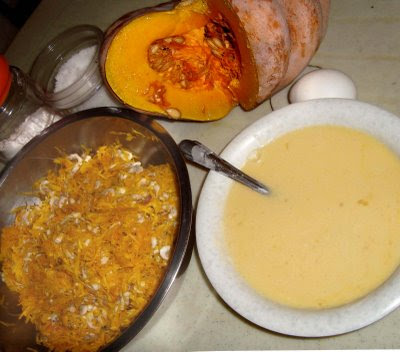
Ingredients: squash, egg, small shrimps, wheat or rice flour, garlic and onion, and a dash of salt
Ukoy made of squash instead of flour is cooked and served in a party, restaurant or just with members of the family and friends.


Preparation: Mix grated squash and egg, green onion, minced garlic, a dash of salt and sprinkle flour to keep the mix intact.  Divide into desired size of serving.

Keep serving small for crispy bite and golden color. Expect a second serving from your guests. Surely they will be back. They will tell to others how tasty and nutritious kalabasang ukoy is.

Squash - summer or any time of the year,

      available, tempering with time
into golden strips old and young do cheer,
      ukoy - recipe among the prime.   
Food value and mineral content of squash (Cucurbita maxima), fresh sample in percent. 


Proteins 1.33
Carbohydrates - 9.33
Fats - 0.43
Crude Fiber - 0.70 
Phosphorus as P2O5 - 0.18
Calcium as CaO - 0.07
Iron as Fe2O2 - 0.009

(From Philippine Journal of Science, Useful Plants of the Philippine, WH Brown)

Wednesday, October 1, 2014

Make your own interpretation of Omar Khayyam's Thematic Quatrain in Rubaiyat

"Here with a Loaf of Bread beneath the Bough,
A flask of Wine, a Book of Verse - and Thou
Beside me singing in the Wilderness -
And Wilderness is Paradise enow."

Quatrain XI from the Rubáiyát of Omar Khayyám
Translated by Edward FitzGerald

Woodcuts depicting the Rubaiyat's thematic quatrain

Dr Abe V Rotor 

1. There's a 5th edition to FitzGerald's Ist edition of Quatrain XI as cited above, which came out long after his death. It is numbered Quatrain XII.  This fifth version retains basically the same style as in the first version. .  

"A Book of Verses underneath the Bough,
A Jug of Wine, a Loaf of Bread--and Thou
Beside me singing in the Wilderness--
Oh, Wilderness were Paradise enow!" 


2. The Rubaiyat was quoted in the film The English Harem (2005): 

"Ah, Love! could thou and I with Fate conspire// 
To grasp this sorry Scheme of Things entire!// 
Would not we shatter it to bits-and then// 
Re-mould it nearer to the Heart's Desire!"

3. A 1967 translation of the Rubáiyat by Robert Graves and Omar Ali-Shah, became controversial.  It was questioned as to its origin, which among the possible sources, could be that of FitzGerald. Here is the 11th and 12th quatrains.  

Should our day's portion be one mancel loaf,
A haunch of mutton and a gourd of wine
Set for us two alone on the wide plain,
No Sultan's bounty could evoke such joy.

A gourd of red wine and a sheaf of poems —
A bare subsistence, half a loaf, not more —
Supplied us two alone in the free desert:
What Sultan could we envy on his throne?

4. Published in 1979 by Peter Avery and John Heath-Stubbs, their edition provides two versions of the thematic quatrain. Although it was criticized, it is claimed to be a modern version, "as literal an English version of the Persian originals as readability and intelligibility permit"

Q 98.
I need a jug of wine and a book of poetry,
Half a loaf for a bite to eat,
Then you and I, seated in a deserted spot,
Will have more wealth than a Sultan's realm. 


Q234.
If chance supplied a loaf of white bread,
Two casks of wine and a leg of mutton,
In the corner of a garden with a tulip-cheeked girl,
There'd be enjoyment no Sultan could outdo.

5. In 1988, the Rubaiyat were translated by a Persian translator, 
Karim Emami and was published in Paris under the title The Wine of Nishapour, a collection of Khayyam's poetry by Shahrokh Golestan. Emami was an outstanding translator of English.  

Example from Emami's work:

It's early dawn, my love, open your eyes and arise
Gently imbibing and playing the lyre;
For those who are here will not tarry long,
And those who are gone will not return.

Example quatrain 160 (equivalent of FitzGerald's quatrain XI in his 1st edition, as above):

In spring if a houri-like sweetheart
Gives me a cup of wine on the edge of a green cornfield,
Though to the vulgar this would be blasphemy,
If I mentioned any other Paradise, I'd be worse than a dog.

6. In 1991 Ahmad Saidi (1904–1994) produced an English translation of 165 quatrains grouped into 10 themes. His quatrains include the original Persian verses for reference alongside his English translations. His focus was to faithfully convey, with less poetic license, Khayyam’s original religious, mystical, and historic Persian themes, through the verses as well as his extensive annotations. Here are selected quatrains.  

Quatrain 16 (equivalent of FitzGerald's quatrain XII in his 5th edition, as above):
Ah, would there were a loaf of bread as fare,
A joint of lamb, a jug of vintage rare,
And you and I in wilderness encamped—
No Sultan’s pleasure could with ours compare. 


Quatrain 75:
The sphere upon which mortals come and go,
Has no end nor beginning that we know;
And none there is to tell us in plain truth:
Whence do we come and whither do we go.

Quatrain XI in his 1st edition:
Here with a Loaf of Bread beneath the Bough,
A Flask of Wine, a Book of Verse - and Thou
Beside me singing in the Wilderness -
And Wilderness is Paradise enow.

Quatrain XII in his 5th edition:
[2]
"A Book of Verses underneath the Bough,
A Jug of Wine, a Loaf of Bread--and Thou
Beside me singing in the Wilderness--
Oh, Wilderness were Paradise enow!"
 

7. One of the title pages of Principia Discordia (1965), a co-author by the pen-name Omar Khayyam Ravenhurst, features apparently a popular version which runs like this -
A jug of wine, 
A leg of lamb 
And thou! 
Beside me, 
Whistling in 
the darkness. 


Old Omar Khayyam, epitome of a philosopher-poet, ponders on his masterpiece and signature - The Rubaiyat.    

8. In the opening chapter of his book God is Not Great (2007), Christopher Hitchens quotes from Richard Le Gallienne's translation of Khayyam's famous quatrain: 

And do you think that unto such as you 
A maggot-minded, starved, fanatic crew 
God gave the secret, and denied it me? 
Well, well--what matters it? Believe that, too! 


9. The title of Daphne du Maurier's memoir Myself when Young is a quote from quatrain 27 of Fitzgerald's translation: 

Myself when young did eagerly frequent 
Doctor and Saint, and heard great Argument 
About it and about: but evermore 
Came out by the same Door as in I went.


10. · The Supreme Court of the Philippines, through a unanimous opinion penned in 2005 by Associate Justice Leonardo Quisumbing, quoted The Moving Finger when it ruled that the widow of defeated presidential candidate Fernando Poe Jr. could not substitute her late husband in his pending election protest against Philippine president Gloria Macapagal Arroyo, thus leading to the dismissal of the protest.(Wikipedia)

NOTE: The Moving Finger is a detective fiction novel by Agatha Christie, first published in the US in 942.  The book takes its name from verse 51 of Edward FitzGerald's translation of the Rubáiyát of Omar Khayyám:

The Moving Finger writes; and, having writ,
Moves on: nor all thy Piety nor Wit
Shall lure it back to cancel half a Line,
Nor all thy Tears wash out a Word of it.

The poem, in turn, refers to Belshazzar's Feast as related in the Book of Daniel, where the expression the writing on the wall originated. The book's title shows in the story figuratively and literally. The anonymous letters point blame from one town resident to another. The Scotland Yard agent determines the envelopes were all "typed by someone using one finger" to avoid a recognizable 'touch'. (Wikipedia)~

Global Warming Breeds Super Bugs

“The world is headed for a post-antibiotic era, in which common infections and minor injuries which have been treatable for decades can once again kill. ” 
-  Keiji Fukuda, Assistant director-general, World Health Organization. 

Dr Abe V Rotor
In another article in this Blog, “Industrialization is Driving Our Climate Wild,” I discussed how global warming affects agriculture. In this one I will present how the present phenomenon affects our health and welfare, and why we should gear up against the possible epidemic spread of pests and pathogenic diseases.

Global warming model at the former St Paul University Museum

Leptospirosis, also called infectious jaundice, became known as a disease recently when Manila virtually remained underwater for days as a result of monsoon rains intensified by a series of typhoons. The disease’s symptom is yellow coloration of the skin. The causal organism is a spiral bacterium, hence the name, and is endemic where public sanitation and personal hygiene are neglected. One can contact the disease through infected rodent and other animal urine. According to reports, most of the victims acquire the disease from polluted drinking water or wading in flood streets. The suspected carrier is the Rattus rattus norvigicus or city rat, counterpart of the field rat, Rattus rattus mindanensis.

How do we know if a person has contacted the disease? At first, the symptoms are like those of an ordinary flu, which may last for a few days as the pathogen incubates in the body. If not treated immediately, the infection may lead to hemorrhages of the skin or mucus linings and eye inflammation. Extreme cases may lead to irreversible damage to the liver and kidney.

As floodwaters drive the rats out of their subterranean abode (such as canals, culverts, and sewers), they take refuge in homes, market stalls, restaurants, even high rise buildings and malls, bringing the infectious bacterium directly to its victims. The migratory nature of rats also explains how leptospirosis can reach people living far from the flooded areas.

Bubonic Plague or Black Death

This brings to mind the dreaded scourge of mankind in the Middle Ages, bubonic plague. Rats are the carriers of this bacterium-caused disease also called the Black Death. It was so deadly that it claimed the lives of at least 100 million people with 25 million in Europe alone. It stopped man’s progress that the period was appropriately described Second Dark Ages. It spread around crowded cities and towns, with the pestilence peaking with climatic upheavals, such as what we know today as the El Nino phenomenon. Historical accounts are usually laced with superstitious beliefs. With the arrival of Renaissance (Rebirth of Learning) in the 15th century the whole incident was shelved and filed away in archives. But scientists today are piecing up together evidences which may indicate that climate had something to do with long-term cycle of the disease.

The bubonic plague appeared in the United States at the start of the 1900 and then in India in the late 1970’s, but thanks to modern medicine the disease was effectively controlled even before it reached epidemic stages. Between 1941 and 1945, the Japanese used the plague bacteria in war, by rearing the germs clinically and using flea (Xenopsylla cheopis) as carrier. The idea is to sow pestilence, thereby defeating the enemy both in the battlefield and at home. After successfully testing the bubonic plague bombs on China, Japan aimed the new biological weapon against its number one enemy, the U.S. The attempt failed when the American forces dropped two atomic bombs in 1945 obliterating Hiroshima and Nagasaki, resulting in the end of World War II hostilities.

Adverse Weather and Common Ailments

 Antibiotics fail 15% of patients due to superbugs and ‘reckless’ prescription.

Common ailments are usually tied to adverse weather conditions. Following are same examples:

1. The outbreak of boils for one is more likely to occur under hot, steamy weather. The same is true with many bacterial and fungal skin diseases.

2. Influenza outbreaks coincide with extreme changes in weather conditions, normally, towards the rainy season and start of the Siberian High (cold months).

3. Typhoid cases are higher during the rainy season, particularly when there is a flood. It is the floodwater, mixed with sewage and other organic waste that carries the pathogenic bacterium, Escherichia coli.

4. Dengue Fever mosquito larvae, Aedes egypti may aestivate in the dry season. But once rains come it starts breeding in empty bottles, old tires, basins and clogged gutters. Rain and flood enhance the population and spread of mosquitoes, which spread not only dengue but malaria, too.~
----------------------------------------------------------------------------------------------------------------
Why are water treatment facilities spreading super bugs even after the water has been treated? Is chlorine an effective water disinfectant?

Experts are beginning to ponder these questions as water treatment plants are routinely found to be ineffective. New lab results show that specific infectious superbugs can now spread drug-resistant genes at water treatment plants.
- Red Ice Creations: Dispelling the Mythmakers
 ---------------------------------------------------------------------------------------------------------------

Treaty of Nature and Man

 It is only through proper management and effective conservation, such as reforestation, pollution control, erosion control, limited logging, and proper land use, that we can insure the continuity of our race.  All we have to do is to keep ourselves faithful to the treaty between nature and man.

Dr Abe V Rotor 
 Carthage aftermath of the Punic wars; Carthage today. (Wikipedia)

      Frantic exploitation of natural resources through illegal logging operations, followed by slash-and-burn agriculture (kaingin), has brought havoc to the Philippines in the past century.  The detrimental results are measured not only by the denudation of once productive forests and hillsides, but also destruction through erosion, flood, drought and even death. 

      An example of this kind of ruination brought about by abuse of nature is the tragedy in Ormoc City where floodwaters cascading down the denuded watershed, killed hundreds of residents and countless animals. It took ten years for the city to fully recover.  Ironically, before the tragedy, Ormoc, from the air, looked like a little village similar to Shangrila, a perfect place for retirement.

      A land area designed by nature to sustain millions of people and countless other organisms, was touched by man and we are now paying the price for it.  Man removed the vegetation, cut down trees for his shelter and crafts, and planted cereals and short-growing crops to get immediate returns. He hunted for food and fun, and in many ways, changed the natural contour and topography of the land.

      Following years of plenty, however, nature reasserted itself. Water would run unchecked, carrying plant nutrients downhill.  On its path are formed rills and gullies that slice through slopes, peeling off the topsoil and making the land unprofitable for agriculture.  Since the plants cannot grow, animals gradually perish. Finally, the kaingero abandons the area, leaving it to the mercy of natural elements. It is possible that nature may rebuild itself, but will take years for affected areas to regain their productivity, and for the resident organisms once again attain their self-sustaining population levels.

      There are 13.5 million square miles of desert area on earth, representing a third of the total land surface. This large a proportion of land may be man-made as history and archeological findings reveal.

      Fifteen civilizations, once flourished in Western Sahara, Tunisia, Libya, Egypt, the Sinai desert, Mesopotamia, and the deserts of Persia. All of these cultures perished when the people of the area through exploitation, forced nature to react. As a consequence, man was robbed of his only means of sustenance.
_____________________________________________________________

Man, being the superior organism, has not only won over his rivals -  all organisms that constitute the biosphere.  He has also assaulted Nature.
_____________________________________________________________

      History tells us of man’s early abuse of nature in the Fertile Crescent where agriculture began some 3000 years ago.  Man-made parallel canals joined the Tigris and Euphrates Rivers to irrigate the thirsty fertile valley. In the process, the balance of Nature was overturned when the natural drainage flow was disturbed. Because the treaty was violated, nature revenged. The canal civilization perished in the swamps that later formed. The sluggish water brought malaria and other diseases causing untold number of deaths and migration to the hinterlands. Among its victims was Alexander the Great.

      Carthage had another story. Three wars hit Carthage, known as the Punic Wars.  On the third one, the Romans ploughed through the city, ending reign of this erstwhile mercantile power, and removing the threat to the Roman economy. After the conquest, the Romans pumped salt-water inland and flooded the fertile farms. Today, Carthage exists only in history and in imagination of whoever stands atop a hill overlooking what is now a vast desert.

      Omar Khayyam, if alive today, cannot possibly compose verses as beautiful as the Rubaiat as written in his own time. His birthplace, Nishapur, which up to the time of Genghis Khan, supported a population of 1.5 million people, can only sustain 15,000 people today. Archeologists have just unearthed the Forest of Guir where Hannibal marched with war elephants. The great unconquerable jungle of India grew from waterlogged lowland formed by unwise irrigation management.

      It is hard to believe, but true that in the middle of the Sahara desert, 50 million acres of fossil soil are sleeping under layers of sand awaiting water. Surveyors found an underground stream called the Albienne Nappe that runs close to this deposit. Just as plans were laid to “revive” the dead soil by irrigation, the French tested their first atomic bomb. Due to contamination, it is no longer safe to continue on with the project.

      The great Pyramids of Egypt could not have been constructed in the middle of an endless desert. The tributaries of the Nile once surrounded these centers of civilization. Jerusalem appears today as a small city on a barren land.  It may have been a city with thick vegetation.  This was true of Negev and Baghdad.

      For the Philippines, it is high time we lay out a long-range conservation program to insure the future of the country.  This plan should protect the  fertility of the fields, wealth of the forests and marine resources, in order to bring prosperity to the people. As of now, the country is being ripped apart by erosion and floods due to unscrupulous exploitation by loggers and kaingeros.
Fishpens and fish cages crowd the shore of Tikob Lake, Tiaong Quezon 

      It is only through proper management and effective conservation, such as reforestation, pollution control, erosion control, limited logging, and proper land use, that we can insure the continuity of our race.  All we have to do is to keep ourselves faithful to the treaty between nature and man.~