Tuesday, October 14, 2014

Memories by the Sea

Dr Abe V Rotor 

Sunken Pier, South China Sea, Sto Domingo Ilocos Sur


That was a long, long time ago
In a place by the western sea,
Hidden by feathery bamboo,
Thickets of wild kakawate
And the old resilient maguey.
I used to ride a wooden cart
Creaking on the dry stream bed,
Until I reached where two roads part
One leading to a homestead
From where came our daily bread.

This is the place I used to know,
Part of my childhood, part of me,
Where seasons come and seasons go;
Early dream of a destiny -
A beautiful life by the sea.

Faces I knew, old friends now gone,
Stare the young at someone new;
Big trees that used to shade the sun,
Houses I remember are few,
All makes an unfamiliar view.

Old Rip van Winkle I’m today,
Longer did I sleep than he;
And too long I had failed to pay
Respect to this land by the sea,
And the treaty of time and me. ~

Critique-Analysis in Photography (Workshop)

Dr Abe V Rotor

Group work, 5 members.  Please analyze each photograph and answer the questions raised in each. Download with answers per photograph and print.  Use Arial 12, same as in this post.  Type on regular bond with number of pages as needed. For submission July 20, 2012.

1. Nature photography. Does this fish really exist in nature? Or the product of photo editing? Write its appropriate caption.


 2. Bleeding heart pigeons.  It's romantic.  Make the caption in verse style.

3. Smiling pig. Who is your target audience? Support your answer. 

4. Suppose you don't have a tripod, what would you do to get a nice photo such as this? How do you enhance the silhouette effect of the subject - ? Why is it that the high cliff at the left was not cropped by the photographer? So with the length of bridge at the right? (Old Quirino Bridge over Bannaoang Pass, Santa, Ilocos Sur)

5. You can hear in your mind the cascading twin waterfalls in Patapat (Pagudpug, Ilocos Norte). Here is one I wrote.

Rage, rage, rage!
And I'll be calm;
Be calm and I shall rage.
Rage, rage, rage!

Can you interpret the verse? Relate it with the environment (ecology). What is the advocacy of this verse?
6. What is the significance of this photo? What tree is this? Does it tell the changing of seasons? Photo taken at SRA Compound, Diliman,. QC
7. Write the caption of this photo. This photo is part of a scientific paper for publication. Photo was taken at Avilon Zoo, San Mateo, Rizal.    
8. Close-up photography. Could there be a better shot than this?  If you were the photographer what improvement would you have made? 
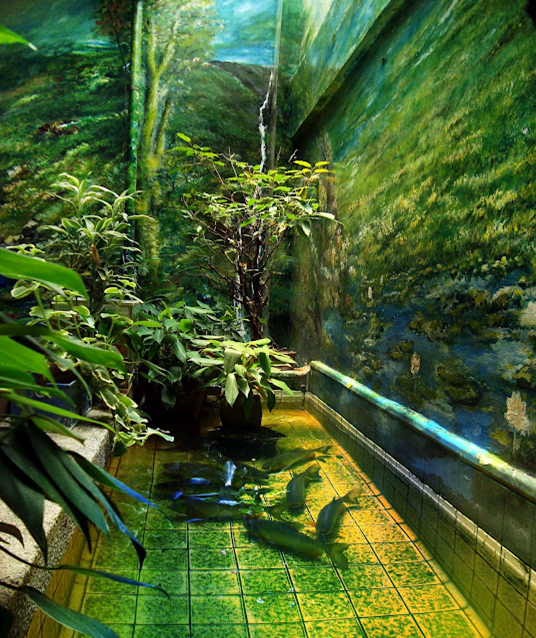
9. Landscape mural painting and garden pond. There is poem I wrote with this last stanza.

When lakes and rivers dry, and the sky no longer blue;
as cities grow, land fills with waste, air no longer fresh;
I pick my brush, say a prayer in color, shade and hue,
Inviting my Creator, "Please come, and have some rest." 

Explain the meaning of the verse, as well as its advocacy.
                    
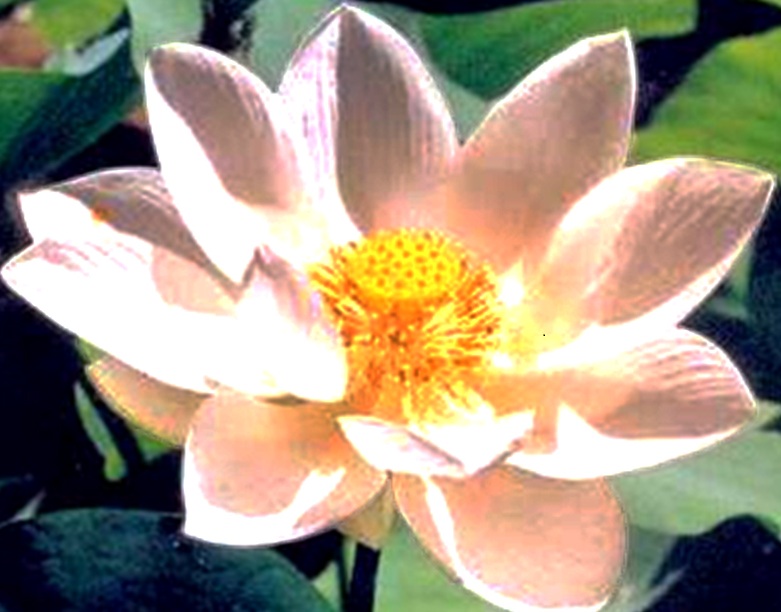
10. This is an edited photo. Has the flower lost its symbol? What flower is this in the first place? What does it represent? Its use?
                     
11. Why is this photo of human interest? Does it show poverty, abandonment, sympathy? Write the caption.
12. The power of repetition in photography. What breaks its monotony? What is the subject about? What are similar photos adopting this technique?

Sunday, October 12, 2014

10 Frankenstein monsters roaming in our midst

Dr Abe V Rotor
"Mushroom cloud" -  Atomic Bomb Explosion (Acknowledgment, Internet)
 Anyone who has read Frankenstein cannot forget the frightful scenario of a monster created in the laboratory that eventually turned against his master and terrorized the world - a reminder of the unpredictable consequences of science-on-the-loose.

Invariably we have revived the Frankenstein monster in many forms, such as these.

1. The invention of the atomic bomb and its subsequent progeny - hydrogen bomb, neutron bomb and cobalt bomb - that are far more deadly and destructive, and their stockpiling into a power keg that still exist today even after the Cold War has ended in 1989.

2. Medical breakthroughs in saving lives and extending life span contribute to the population explosion and demographic imbalance where societies are burdened by too many young who are unproductive and highly dependent, and elderly group, with increasing healthcare-dependent members.

3. Organ transplantation and replacement which is leading us farther and farther to a new frontier called bionics; a combination of the rational being and the robot, natural and artificial intelligence.

4. Genetically modified organisms (GMO) whereby it is possible to combine genes of organisms outside their kind, irrespective of species - or kingdom, for that matter. Bt Corn carries the gene protein of a bacterium - Bacillius thuringiensis - that parasitizes caterpillars that feed on corn crop. New strange life variations are sprouting defying identity and classification.  They are nameless like the monster created by Frankenstein.

5. Mega-industrialization that has resulted not only to the demise of natural environments (ecosystems) and many species of organisms, but the destruction of the ozone layer and the gradual and steady buildup of atmospheric temperature known as global warming.

6. Urbanization leading to the growth of megacities which continue to destroy the homeostasis of rural-urban relationship, spawning poverty and leading to the degradation of human life at the source of migration on one hand, and at the burgeoning centers on the other.

7. Population explosion setting a record of 7 billion people today and doubling in less than fifty years if left unchecked - indeed a grim reminder of the ghost of Malthus two hundred years ago (Malthusian Theory), and a proof that the natural laws that govern survival has been radically changed.

8. Consumerism on which capitalism flourishes in the guise of progress and the good life, but in effect creates imbalance of the economy of nations, dividing them into power-wealth categories, and have and have-not, loss of values, and abusive exploitation of resources at the expense of Planet Earth.

9. Gold rush syndrome resulting in the Tragedy of the Commons, a principle that is based on Chaucer's Pardoner's Tale, a story that illustrates that greediness and wanton destruction has always a tragic end, as evidenced today by the declining fish catch in the ocean, dwindling freshwater supply, logged over forests, spent farms and pastures, near exhaustion of fossil fuels, and the like.

10. While ecumenism bridges religions, cultism is divisive and segregative. There is a rise of the so-called hybrid religions which have lost their dogmatic identities, and are gaining popularity as a kind of religious liberation. On the other hand, more and more people around the world are drawn into the world of nones (people who have lost faith in organized religions) - if not the atheism, particularly those overwhelmed by the influence of postmodern living.~

These ten attributes of a modern Frankenstein haunt modern man and his society today exacerbated by his aim at globalization. The shrinking of the planet into a global village so to speak, through scientific breakthroughs, expansion of commerce and industry, opening of new frontiers of human settlement and habitation which sooner or later include the building of cities under th sea and in space, and the proliferation of multimedia making information accessible anywhere in any place of the globe - all these make the avenging monster closer to his creator, and therefore making him vulnerable to its evil intent. Such is the story of Mary Shelley's fiction that has a tragic ending - the destruction of both monster which never bore a name, and its creator - the young genius, Frankenstein. ~

Tuesday, October 7, 2014

Goodbye Leaning Firetree, Goodbye

Dr Abe V Rotor
Also visit my other Blogs:
[avrotor.blogspot.com]
[Living with Nature]
[naturalism - the eighth sense] 

Firetree (Delonix regia) in bloom leaning precariously
45 degrees towards Regalado Ave., Fairview, QC 2010

An arch and a crown you make
for all passersby
to greet and honor them;


your trunk and limbs reach out
in friendly handshake 

and embrace;

you send confetti year round,
green in monsoon,
fire red in summer;


you comfort the tired and weary
under your shade;

you filter the air of gas and dust,

heat and sound;


mark the passing of seasons,
the turn of the clock;

you are home and inn of creatures:
birds and their young,
fern and moss clinging,
to bees and butterflies;


you stir imagination into the arts,
in song and poetry;


rise up and point to heaven
to enliven the spirit;


with arms outstretched for so long,
you have been calling, pleading,
for a passerby to stop and look up; 


I did but you were no longer there.

NOTE: The last time I passed by the tree it was no longer there. On its stump cut by a chainsaw sat a road worker resting in the noon sun, his gaze expressionless and far.  


Sunday, October 5, 2014

Photography: Capturing the Natural Expressions of Children

It is quite difficult to capture expressions of children with the camera, but it's a rewarding one. Innocence goes with expression, thus it exudes naturalness and candidness. True expressions are as fleeting as childhood is. It comes in a spark, testing the photographer's skill in recording such precious moment.

Dr Abe V Rotor

How good are you in capturing the "little prince or princess" in a child?
 
 Curiosity and awe in children. former SPUQC Garden

 
 Art workshop for children in the neighborhood, Lagro QC

 
 Family clan picnic on the beach, Bacnotan La Union


Curiosity in discovering Papyrus, the material for
Egyptian paper. Sunken Garden, UP Diliman QC

Children playing among the religious icons,
Manaoag Shrine, Pangasinan

Posing before wind turbine toy models in a children's
workshop, Lagro QC
 
 Happy expressions of kids before the camera.
Creative moments in children. Summer Art Workshop, NFA QC

Feeling of pride in ones work. At home.
Comfort and security with their lola. Iba, Zambales.
Mixed feelings of boredom, uneasiness, patience.
Philippine Children's Hospital, QC
Delight in playing, with tinge of shyness. San Fernando,
La Union plaza
A young hand takes over her elder's work. Palm Sunday
at Lagro Parish.
Joy in harvesting the "fruits of labor" in their home garden.
Author's residence, La Mesa subdivision, Quezon City
A young hand attends to a customer in her parents'
antique and figurine shop. Pugo, La Union

Make an album of photographs of children and old alike in their smilingest moments.

Friday, October 3, 2014

"Ten-Ten-Ten": The Dog that found a home

Dr Abe V Rotor

Jemille and Ten-ten-ten
It was a quiet afternoon and guess who was knocking at the gate?
A starving dog, a mongrel, and what is there in him to gain?  
Could you spare me a morsel? His eyes moist and sad, begging,
And food we gave, closed the gate, everything was quiet again.  

The sun was setting down, we saw a shadow seeping through the gate,
He is still there, I told the children, and he was knocking again, 
Could you spare me a place for the night? His moaning told us so,
Who are you, who is your master? Silence. I felt a little pain.   

We took him in.  It was a special date on the calendar that comes
But once, and never again, not in a lifetime or generation.
Tenth day, of the tenth month, of the first decade of the millennium,   
And we named this lost dog Ten-ten-ten. What a celebration!  

Home he found and a happy company with us and the neighborhood,
Call his name, you wish luck and fortune, how easy to remember! 
And children tired from school come knocking to play with their friend,
Can we play with Ten-ten(-ten)? Heaven sent a dog to love and share.  ~

30 pesticide-free vegetables. How many can you identify?


In general, leafy vegetables (e.g. pechay) and fruit vegetables (e.g. tomato) receive more chemical spraying than do root (potato) and seed (mungo) vegetables. On the aspect of pesticide application, vegetables are classified into two: those that do not need spraying at all, and those which can not be raised economically without chemical protection.
Dr Abe V Rotor

Living with Nature School on Blog
Paaralang Bayan sa Himpapawid (People's School-on-Air) with Ms Melly C Tenorio
738 DZRB AM Band, 8 to 9 evening class, Monday to Friday
Himbaba-o or alukong Ilk; papait (Mollugo oppositifolia)

 Assorted native vegetables: patani, himbaba-o, eggplant
Talinum, alugbati

Dampalit, bagbagkong
Edible fern (pako'), saluyot

This lesson was aired in a series of radio broadcast on Paaralang Bayan sa Himpapawid (People's School-on-Air) on DZRB 738 KHZ and [www.pbs.gov.ph] This also serves as reference in Economic Botany, a three-unit subject offered at the UST Graduate School and De La Salle University,

The purpose of this lesson is to promote home gardening nationwide and worldwide in response to three crucial issues affecting our society today.

The first is to build natural body resistance against the current pandemic of A(H1N1) or swine flu through the consumption of more fruits and vegetables.

The second is to promote a bottom-up approach of providing alternative sources of food through people's initiative to produce food and reduce food cost and increase the level of nutrition to cushion the effects of the worsening global economic crisis.

The third is to reduce the incidence of slow poisoning as a result of the accumulation of pesticide residue in the body. Vegetables and fruits are the principal carriers of residual poison from chemical spraying which leads to the development of many ailments, such as cancer and impairment of the senses and loss of control of the nervous system.

In general, leafy vegetables (e.g. pechay) and fruit (tomato) vegetables receive more chemical spraying than do root (potato) and seed (mungo) vegetables. On the aspect pesticides, I would rather classify vegetables into two: those that do not need spraying at all, and those which can not be raised economically without the protection of chemicals.

For the first category here is a list of 30 common vegetables in their common and scientific names. Farmers simply find them resistant to insects, mites, nematodes, snails, fungi, including weeds, rodents and birds. These vegetables may also be found in the wild, or in the open spaces.

1. Malunggay (Morinda oleifera)
2. Saluyot (Corchorus olitorius)
3. Wild ampalaya (Momordica charantia)
4. Katuray (Sesbania grandiflora)
5. Batao (Dolichos lablab)
6. Patani (Phaseolus lunatus)
7. Sinkamas (Pachyrisus erosus)
8. Summer squash (Cucurbita maxima)
9. Native eggplant (round) - (Solanum melongena)
10. Native tomato (susong kalabaw) - (Lycopersicum esculentum)
11. Native sitao (short) – (Vigna sesquipedalis)
12.Seguidillas (Psophocarpus tetragonolobus)
13.Alugbati (Basella rubra)
14.Talinum (Talinum triangulare)
15.Native spinach (Amaranthus sp.)
16.Gulasiman (Portulaca oleracea)
17.Sweet potato (tops and root) (Ipomea batatas)
18. Kangkong (Ipomea reptans)
19. Pepper or Sili (labuyo) (Capsicum frutescens)
20. Ginger (Zingiber officinale)
21. Rimas or breadfruit (Artocarpus altilis)
22. Sayote (Sechium edule)
23. Taro or gabi (Colocasia esculenta)
24. Kamoteng kahoy or cassava (Manihot esculenta)
25. Ubi (Dioscorea alata)
26. Tugui’ (Dioscora esculenta)
27. Kadios (Cajanus cajan)
28. Banana (Saba) (Musa paradisiaca)
29. Sampaloc (Tamarindus indica)
30. Kamias (Averrhoa bilimbi)

There are many other vegetables classified under the same category. These include alukong or himababa-o, bagbagkong, papait, sampaloc (flowers, tips and young pods), flowers of madre de cacao or kakawate.

Reference: The Living with Nature Handbook by AV Rotor, UST Publishing House, Manila