Friday, June 10, 2016

Exploring the wide, wide world of art


Modern tools, electronics and computers, have brought in a new face of art in all fields, challenging the true meaning of fine art, of music conservatory, of classics.

Dr Abe V Rotor 
Composite painting on Reviving the Spirit of Nationalism by a student artist. 

Student artists at work. Inter-school painting competition, University of Santo Tomas, Manila 2013


Art spans through epochs and ages - from the early Homo sapiens and possibly, the Neanderthals, to Van Gogh and Picasso - it is universal, timeless, yet evolving;

Art in fossils, art in totem poles, pyramids and ziggurats, etched on rocks, cast in metals – they are emissaries of history, and part of history themselves that speak of culture.

Prehistoric paintings in the caves of Lascaux, France, usher the birth of human art, the dawn of man's consciousness of the world outside the confines of darkness;

Stone age man expressing his genius in inventions, his triumphs over beasts, his skills yet his reverence to a god - the primordial art of living towards the making of a society;

The Renaissance bloomed in the fifteenth century through the Greco-Roman model, surviving the Dark Ages and imbibing part of it, that make culture varied and rich;

We are astonished by the art of Michelangelo, Raphael, and Da Vinci, as they were astonished by the art of lost civilizations - Egyptian, Babylonian, Persian, Greco-Roman;

The latter could have learned their art from prototype cultures, and from cultures on the other side of the globe – the Aztecs, Chinese, Indians, prior to their colonization.

Exploration brought two worlds together, the East and West - the latter as masters of peaceful cultures, under a prototype globalization version of a master-slave relationship;

Art flourished and the lethargic schools of Classicism and Romanticism opened up; movements followed one after another – Realism to Impressionism to Expressionism;

On to Abstract Art which dominates today in various ultra-modern schools like surrealism, yet art continues to cling to its roots, making alive its ethnic and indigenous origin;

Modern tools, electronics and computers, have brought in a new face of art in all fields, challenging the true meaning of fine art, of music conservatory, of classics;

Art in advertisement, art in high rise, art in cinema, art in malls, art in athletics, fashion, body language, cars, drones, war, etc. – make us wonder what is art and what is not;


Crisis in art to fundamentalists and critics on their pedestals, revolution to avant-garde, futuristic in the computer, money in business, boom in media and communication art;

Art, where art thou heading for? When millions have not enough food, education, homes, in the midst of affluence, yet not enough sanity, not enough hope to live for?

Revolution in art in reverse: the bypassed involved, the gifted challenged, the uninvolved touched in their lives – for art’s meaning is to live with meaning. ~

 
Top, Futurism: Death by Genetic Engineering by AVR; Stop Nuclear Development, Love Life by a 12 year old summer art workshop participant.  

Wednesday, June 8, 2016

Farming sloping land - a case of economics or ecology


Dr Abe V Rotor

Upland in Silang, Cavite, typical of farms on sloping land. Erosion does not only reduce soil fertility; it strips off the fertile "skin and flesh" of the land permanently. There are ways to conserve sloping lands. First, is by keeping the natural vegetation and maintain the area as watershed. Second, if you wish to farm a sloping land, say make it into an orchard, consult your nearest DA and DENR offices. They know best and will advise you of what to do. This is a case of economics or ecology.

Survival and living spell ecology,
where one exists day to day,
the other provides for a rainy day,
and not forgetting to pray. 
~

Tuesday, June 7, 2016

Yes, you can bring down the rainbow - and touch it, too.

Rainbow - too high, too far, too abstract, yet to children it is near, it is real and true; rainbow the symbol of beauty and hope, it comes when the sky is gloomy and dark.
Dr Abe V Rotor


Morning rainbow across the hills and river in Bamban, Tarlac
 
Children in the neighborhood delight in making a rainbow through an aquarium as prism. You can make one, too, in your home. 


Rainbow - a kaleidoscope of colors in a pattern of seven - red, orange, yellow, green blue, indigo and violet - that guide man's art in endless combinations.

Rainbow - it builds slowly before our eyes; it comes as twin, or breaks out suddenly perking up life in its low ebb, and taking out the boredom of living. 

Rainbow - gauge of weather, reference for travel and trade, source of inspiration of lovers, bards and writers, subject of the arts, icon of faith and devotion. 

Rainbow - the make-believe subject in children's stories of fairies and spirits; the most sought treasure of grownups - the proverbial pot of gold. 

Rainbow - ephemeral for which its beauty in heightened, like a rose in the morning, first rain in May, the passing of day and night, and the march of seasons. 

Rainbow - likened to the cycle of life - its birth and death, glory and fall, its simplicity grandeur, its independence and attachment to all things, visible and invisible. 

Rainbow - now you see it, now you don't, a puzzle to the old and young in all walks of life, yet seeing it best with a clear mind, pure heart and spirit.

Rainbow - it conquers gloom, sows hope, builds the biggest, the most beautiful and magnificent arch of the world that bestows honor to everyone. 

Rainbow - the cathedral in the sky that brings the faithful of all beliefs together in awe and respect to the Creator, the unifying grace of all mankind. 

Rainbow - too high, too far, too abstract, yet to the children it is near, it is real and true; rainbow the symbol of beauty and hope, it comes when the sky is gloomy and dark. ~


Rainbow comes down to earth in many ways - in flowers in spring, leaves in autumn, mountains at sunrise, reflection of lakes, spray of running streams, mirage in deserts, feathers of fowls, and the like. The rainbow is commonly imitated in man-made structures and designs, and many items of trade and commerce.

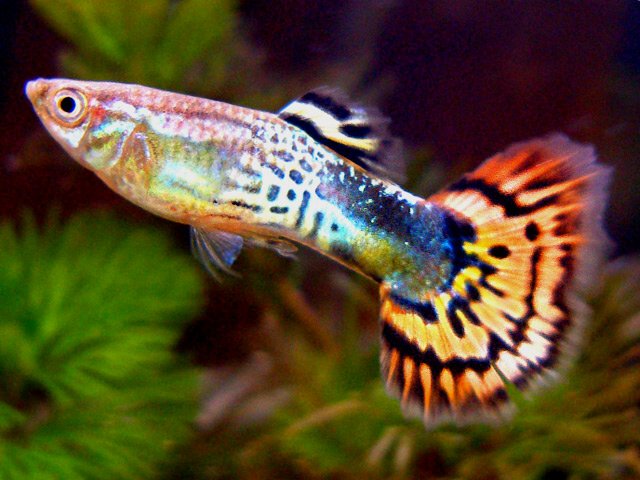
Living things like this rainbow fish have captured through evolution the colors and pattern of the rainbow, assuring them of their place in the living world.

The Lost Owl

 Years passed.  I dreamt of a bird on a lonely road, cold as snow.
I dreamt of a bird on a lonely road, cold as snow.
Dr Abe V Rotor
Philippine Owl, circa 1969

It fell from its roost, and  that was a long time ago,
and I was then young and eager about the world -
What would I care about an owl suddenly appearing
in broad daylight, and I driving a top-down Ford? 

It gave a kind of queer smile, its eyes half-close,
hunched and still, but I'm not the birdman Audubon -
What would I care about this descendant of dinosaurs,
to tell me its lineage, and I, a link to a larger bond?  

No. I had pressing task to finish, I had to drive fast;
Wait, my partner said, and took a photo of the fellow;
and down the lane and up we went. Years passed.  
I dreamt of a bird on a lonely road, cold as snow.~  

Sunday, June 5, 2016

Learn Science in your Garden


Dr Abe V Rotor 

Living with Nature School on Blog 
Paaralang Bayan sa Himpapawid (People's School-on-Air) with Ms Melly C Tenorio
738 DZRB AM Band, 8 to 9 evening class, Monday to Friday                                                
Plants lose water by transpiration (through stomates) and gutation through special "valves." Here gutation is shown in Rhoeo discolor.  Droplets line the leaf edges mistaken as dewdrops in early morning. Excess water in the plant is released through special valves to protect the cells from plasmoptysis or excess pressure, the opposite of plasmolysis (shrinking of cells for lack of water). This is a physiological phenomenon existing in the plant world.  
Bagworm (Cryptothelea fuscescens) is the turtle in the insect world with the larva enclosed by a silk bag it builds which grows with the larva itself in four or five moltings becoming bigger in each instar (larval stage).  It spends its pupal phase outside, hanging at the posterior end, then emerges into a moth.  But in the case of the female, it spends its pupal and adult stages inside the bag. Because it is wingless mating is done through the posterior opening of the bag with the male attracted by pheromone (chemical scent).  After fertilization, it lays her eggs inside, squeezes out and dies on the ground.  
Lantana camara, a sturdy shrub exudes obnoxious odor from its flower and body, specially when disturbed.  Its leaves and young stems are covered with tough hairs that easily break when touched, thus emitting the characteristic odor that earned his name bang-bangsit, which means odorous in Ilocano.  This odor however makes the plant a repellant against a host of destructive insects, except for certain butterflies and other insects that pollinate the flowers.  With natural farming gaining popularity, Lantana is welcomed in garden as biological agent against pests. 
Lichens are indicators of good environment. They are plentiful when the environment is pristine, and the air is not polluted.  The three kinds of lichens indicate the degree of pollution. Fruticose (above, right) indicate very clean environment, foliose (leaf-like) indicates declining condition, and crustose (crust-like, left) tolerable level.  The less the lichens are found, the more the environment is deteriorating.  Thus the lichens are practical biological indicators. 

Preying mantis (Mantis religiosa), the executioner in the insect world, spares no insect - not even its own kind.  The female mantis kills her mate while in the act, devour it after for nutrition. But farmers and gardener like them for protecting their plants, and while they are villains in their world, they are harmless to humans.  Sometimes they are regarded as pets.  
Colony of aphids (Aphis sp) at the leaf axils of variegated fortune plant.  Black mass of fungus  grows on the sugary exudate of the aphids. It is this natural sugar made from the plant sap the insect sips that attract red ants.  these ants protect the aphids from predators like ladybugs. Note self regenerating capacity of the plant (right) that shows the plant's ability to survive the pest. 
Bumble bees have become rare in gardens, so with butterflies and honeybees. This is because the air is becoming more polluted, and there are less and less free spaces to build gardens specially in cities. Radiation emanating from transmission towers creates disorientation of pollinators, particularly honeybees as they search for nectar and pollen over long distances and returning to their hive. No wonder the cost of honey has gone up,  so with insect pollination-dependent fruits,vegetables and seeds - these apparently is a  result of our deteriorating environment.
Plant physiology. Apparently there are no common characteristics between bamboo and cactus in this photo. In the first place the bamboo can support itself, while the cactus has to depend on a support - a wall to cling on. Photosynthesis takes place in the green stem of the cactus which is not possible in the bamboo and its kind. The one thing they share, other than water and basic nutrients, is phototropism - both rise to reach for sunlight, and for space. But nature provided each one certain adaptive mechanisms to compete as well as to live under one niche. It is this principle that enables plants to live together naturally like in a forest.  
Poke marks caused by insects create a subject for abstract art.  Viewed against the bright sky the leaf shows netted venation, like veins and capillaries, which supply water and materials for photosynthesis, and it products mainly sugar, to other parts of the plant. Deep green coloration shows richness in chlorophyll.  The leaf structure is an engineering marvel that continues to inspire architecture and engineering.  In the field of medicine, the network of vascular and leaf tissues may provide the key to understanding tissue transplant and stem cell culture.  
 Makahiya (Mimosa pudica) makes a plaything for children and adults trying to steal a leaf without drooping, wishing almost anything in the world from love to fortune - if  they succeed. And no one will ever succeed in altering nature's gift to this shy plant. Special cells called pulvini control the drooping of the leaflets and the whole compound leaf, and restoring them fresh and erect once these cells are filled again with water.  The powder puff flowers attract bees and other pollinators without alarming the plant, thus insuring fertilization and production of seeds.  


Genetic Pollution is permanent and damaging to the biosphere

Emergence of a new kind of pollutant – runaway genes. 
Dr Abe V Rotor
Genetic engineering is creating unwanted genes and gene materials that carry certain traits that can “pollute” the natural genetic pool.  One example is Bt Corn, a Genetically Modified corn that contains an insect repelling protein snipped from the DNA of Bacillus thuringiensis, a bacterium known to cause epidemic among caterpillars, including the silkworm. 
Genetically modified plants, in acrylic AVR
     In the open field the pollen of Bt corn is freely liberated and is disseminated by wind and insects, among other means.  Even at far distances the pollen of this GMO  can effectively pollinate cornfields, thus transmitting the Bt component which is expressed in the following offspring or F1.
    
     This new development opens a controversy that touches morals and ethics. It opens a floodgate for researchers to create new types, varieties, hybrids, and even new organisms, which all the more becomes a serious ethico-moral matter.
     Cross-species breeding
     Attempts to breed two different organisms were like the alchemist, transforming an element into another.  While the latter had made strides, which lead, to the making of alloys, the breeder has had little success. The most celebrated case is the mule, which is the offspring of an ass and a mare, or a horse and a she-ass.  But the mule is incapable of self-perpetuation, and must therefore depend the inter-crossing of its two different parents.

     Similar limited success is shown in zebronkey, a cross of the zebra a donkey, and peapple (pear and apple). Unlike the mule, the zebronkey is a freak, which means that  it was bred entirely by chance. So with the peapple.  But the difference is that the latter can be propagated vegetatively, by grafting and budding, and similarly by cutting and marcotting.

     These cases illustrate how nature protects organisms from the inclusion of genes outside their own, which is the key to keeping the integrity of the species.  In short, this is nature’s genetic housekeeping.  As a general rule, genes just cannot be littered around, and even if organisms pick them up, these genes do not pollute the genetic pool of the species. Even the dog which is openly bred into many kinds, will remain a dog. So with the mango, and the rest of the living world.

       The Case of the Living Christmas Tree

     In an agro-industrial fair I attended when I was a young student, I was amazed to see a “living Christmas Tree.” On closer examination the tree is a full grown eggplant, breast high, with branches each of a kind – tomato, pepper, potato, and tobacco.  Surprisingly all these branches were fruiting except the tobacco and potato. It caused a lot of curiosity especially on my part who grew up on the farm and had not seen one occurring in nature.

     “It is an old technique,” the horticulture professor who made the living potpourri explained, “Grafting. You can graft plants that are genetically compatible.  All these plants joined together belong to one family – Solanaceace.”

     This is the final result of the attempt to join the members of a family altogether, without genetically altering them. So the tomato branch produces tomato which tastes exactly like one.  Same is true with the eggplant branches, and so with the rest.

     Again, Nature has its own safety mechanism among plants – including the simpler forms like algae , so that the genes are not altered in the open and in the wild through vegetative transmission. Thus in the field, different plants that naturally live together do not “genetically pollute” vegetatively.

     In vegetative means of reproduction, the compatibility is within the variety or species as a rule. Among species it is only possible to a limited extent, those belonging to the same family. Budding among the members of the citrus family (Rutaceae) is a common horticultural practice. So with members of the cucurbit family (Cucurbitaceae).  One application of this practice of inter species grafting is between the kondol (as stock because of its sturdiness) and watermelon as scion. This graft extends the longevity of the watermelon so that it can produce more fruits, and fruit during off-season.

                  Genetic Engineering Versus Tissue-Organ Transplantation 

      The difference of genetic engineering with tissue-organ transplantation is that GE introduces a gene, or genes, or a snip or a ribbon of DNA, into a recipient. While in the latter, there is no change involved in the process.  Analogously, the tissue or organ is the scion while the recipient is the stock, if we were to compare the process with the grafting of mango. The two parts – the transplant and the recipient, the stock and scion – will never mix genetically, that is, each part will carry their respective sets of genes.  Compatibility is between and among their cells, and not in their genes or DNA – unlike in genetic engineering. 

What is compatible in tissue-organ transplantation is in the way their cells assume physiologic activities like growth and development, metabolism, response to stimuli, and to a certain extent, reproduction. The  transplanted tissue or organ is now part of the recipient organism, which with the new part, can function more efficiently, and perhaps save it from apparent destruction or death.  
 Controversal golden rice
     Genetic pollution then is at present in its incipient stage, unlike the conventional types, like domestic and industrial pollutants. GP is expected to grow by leaps and bounds as progress continues.

      These are vital considerations to ponder:

1.     Genetic engineering – the combination of genes to create desired traits – virtually has no end.  Possibilities are everywhere because of man’s craving for new things that living organisms can give – from antibiotics, to increased production of food.

2.     The virtually endless possibilities in Genetic Engineering does not only create new characters, but new organisms, or shall we say, new life forms, and there is great possibility that the end products may not fit into the natural classification of living things.  

3.     The other side of Genetic Engineering is one viewed from the hands of terrorists and irresponsible persons.  Historically, biological warfare aims at creating virulent forms of pathogens directed to man, his livestock and crops. The benefits of this new science can be overshadowed by the dangers it poses.

4.     Gene pollution could expand to a proportion that does not only affect particular species of organism and their population. It is going to destroy the balance of ecosystems by disturbing the food web, and energy flow.

5.     Once ecosystems such as a lake or a forest is disturbed, they become more and more dependent on human management and are going to be expensive to simulate homeostasis – dynamic balance which only nature can provide.

6.     Genetic pollution is going to be deleterious to health of the individual and the human population.  If this is so then we disturb the workings of our institutions and the society as a whole, and subsequently the decline and fall of civilization.  

Will human evolution take another course?  Will humans ultimately take the path of “auto-evolution”?  Which means we are taking into our hands Creation which only God can do.  If so, then we are playing the role of God.~


Wednesday, June 1, 2016

We should not be afraid of the dark.

We should not be afraid of the dark.
It strengthens our faith and our resolve in life.
Dr Abe V Rotor
Starry Night painting by Vincent Van Gogh.  A song was composed from this painting - Vincent (Starry, Starry Night

Sing or play an instrument with eyes closed as you would when praying.  Or listening to Hating Gabi, serenade by Antonio Molina,  Nocturne by Chopin, and Beethoven's Moonlight Sonata on the piano. 

There in the darkness of the mind come alive the melody, the drama, the scenario that are more vivid than when you were under the influence of light, and the ambiance of the surroundings we neither can create nor possess alone. 

Darkness distills our experience during the day - the many scenes that passed before our eyes, sounds that strained into our ears, stimuli our senses capture willingly or not, from the incessant struggle of daily living. 

We surrender to darkness as if it were our refuge, like in the maternal comfort of the womb, or the purity of innocence in Plato's Allegory of the Cave.  We surrender to the voice in darkness that converted Saul into a saint - St Paul the apostle, to the prayerful realm of a blind girl, Fatima Soriano; the classical vision in a blind tenor-songwriter and lawyer, Andrea Bocelli. (photo)

Darkness makes the following day beautiful, as day makes a well deserve rest in the night for the body and  spirit to settle down in surrender and peace. Darkness recharges our will and strength, refocuses our direction and goal, restarts our tired mind, calms down our racing heart and pulse.


Didn't the exodus led by Moses happen at night, and wasn't in darkness on Mt Sinai that God handed him the ten commandments?  It was in the dark when God appeared to Abraham and promised him "more descendants than the stars"? Didn't the Resurrection take place in a dark cave?

Keller
Gautama Buddha meditated in the caves of northern India.  Mohammad received the Koran in a cave outside Mecca.  St Francis prayed in a tiny grotto near Assisi. Bruce, the Scottish hero, retreated into a cave to escape his enemies and there watched a spider painstakingly built a web.  Inspired, he rebuilt his army, fought the English king and gained back his throne. 


Famous writers found the dark the best place to express themselves. John Milton  wrote Paradise Regained in his blindness, in contrast to Paradise Lost  he wrote while his sight was not yet impaired. Helen Keller, blind since infancy, "saw" in three days in an article she wrote" If I were given three days to see." She saw and experienced the world for so short a time. She saw more than we who can see have seen.  

Milton
Author of Let there be Night, and preacher Barbara Brown Taylor recommend these simple ways to appreciate the dark: A walk in the dark can lead to wisdom, deliver us from fear and Taylor believes, bring us closer to God.

1. Walk slowly at night (where it is safe, AVR). 
2. Watch the moonrise.  
3. Unplug all your devices at night, and 
4. Sit in a closet (as close as a cave as city dwellers can get.) 

Author's Note: Fear of the dark is a common fear among children and, to a varying degree, of adults. Fear of the dark is usually not fear of darkness itself, but fear of possible or imagined dangers concealed by darkness. It is recommended that people who are suffering of nyctophobia or achiuophobia, the phobia of fear should get medical advice before undertaking these steps.~
Acknowledgement: Time April 2014, Wikipedia