Tuesday, September 5, 2017

Bring Back Biotechnology to the Village and Household (10 Indigenous Technologies)i

Before these indigenous products - suka, tugue, basi, patis, buro, and the like, became commercialized, rural households had been making their own supply.
Dr Abe V Rotor


Above, wine made from bugnay or ignay. Wine from different fruits. 
Home-made mineral water - ordinary drinking water treated with malunggay seeds.

Lumpia and ukoy - specialty of Vigan City, UNESCO Heritage City.


1. Make your own “mineral water” with malunggay seeds.

Why spend for mineral water when you can make one right in your home? With all the empty plastic bottles around, you can prepare safe drinking water just by adding crushed seed of malunggay (Moringa oleifera).

This is what you can do. Fill up a liter size bottle (family size softdrink) with water coming from the tap, or if you are in the province, a deep well or spring. Add two malunggay seeds crushed by hand. Allow the setup to settle for two to three hours or until the sediments have settled down. Slowly transfer the filtrate to another bottle for immediate or future use.

Scientists found out that malunggay seeds directly kill bacteria and coagulate suspended particles, slowing down Brownian Movement (constant movement of particulates in liquid medium, colliding with one another and against the walls of the container). Malunggay also impart a refreshing taste to the drinking water. Try it.

2. Pasteurization, the old folks’ way

Farmers immerse and clean the seeds of many field and garden crops in warm water (around 60 degrees Celsius) before planting them. On closer examination, this traditional practice kills harmful bacteria (e.g. Pseudomonas solanacerum) and fungi (e.g. Pythium debaryanum) following the principle of pasteurization, the same as in pasteurizing milk, a discovery made more than two hundred ago by the great French microbiologist, Louis Pasteur, for whom the term was coined.

It is in a small town, San Pablo, at the boundary of Isabela and Cagayan, where fresh milk of carabao is sold early in the morning along the highway. You can actually see the milking of carabao in the field. I used to buy one or two bottles, pint or liter size. The milk is kept in a bucket of warm water (around 50 to 70 degrees Celsius) while it is being sold. In this way the milk does not only reach the customer warm, but actually preserve and make the milk safe through pasteurization. It is pasteurization the old folks’ way!

The application of local pasteurization goes a long way if we analyze the many practices on the farm and home, such as washing of fruits and vegetables in warm water, blanching in the preparation of salad, steaming bottles, and the like.

One application is in rehydrating gamet (Porphyra), a red alga, a delicacy of the Ilocanos. It is similar to the Japanese nori. Wash the dried gamet, then add hot water to a desired amount you wish to have as soup. Observe how it expands into its original colloid state. In the process, the temperature quickly settles down to pasteurization level. Add fresh tomato, onion and a dash of salt and it is ready to serve.

3. Alginate from Sargassum can increase the shelf life of fruits

If you happen to be walking along the beach those dry brown seaweeds washed ashore could bring in a lot of profit, not only as source of algin and alginic acid which are extracted for food conditioner and for industrial use. The researchers, Tumambing K, Santok G, Seares A and V Verzola all from UST, found out that by extracting the alginate substance by ordinary means, the extract is effective in delaying the spoilage of fruits such as mango, papaya and banana. The extract is diluted 5 to 10 percent with water before the ripe or ripening fruits are immersed, then allowed to dry. The alginate compound leaves a coating on the fruit that delays ripening from two to four days, at the same time protects it from microorganisms that cause rotting and spoilage.

4. Home made coconut virgin oil – old folks tell us how to make one.

The price of this “miracle cure” has soared and there is now a proliferation of commercial brands of virgin coconut oil in the market, with many of them unreliable so that people are asking if they can make their own supply.

Why not? Old folks show us the way. I met a kindly old lady, Mrs. Gloria Reyes of Candelaria (Quezon) who makes virgin coconut oil for her family’s use. She explained to me the process step by step.

• Get twenty (20) husked, healthy, and mature nuts. They should not show any sign of spoilage or germination. Shake each nut and listen to the distinct sound of its water splashing. If you can hear it, discard the particular nut.

• Split each nut with a bolo, gathering the water in the process. Discard any nut at the slightest sign of defect, such as those with cracked shell and oily water, discolored meat, presence of a developing endosperm (para). Rely on a keen sense of smell.

• With the use of an electric-driven grating machine, grate the only the white part of the meat. Do not include the dark outer layer of the meat.

• Squeeze the grated meat using muslin cloth or linen to separate the milk (gata) from the meal (sapal). Gather the milk in wide-mouth bottles (liter or gallon size).

• Cover the jars with dry linen and keep them undisturbed for 3 to 5 hours in a dry, dark and cool corner.

• Carefully remove the floating froth, then harvest the layer of oil and place it in a new glass jar. Discard the water at the bottom. It may be used as feed ingredient for chicken and animals.

• Repeat the operation three to four times, until the oil obtained is crystal clear. Now this is the final product – home made virgin coconut oil.

Virgin coconut oil is a product of cold process of oil extraction, as compared with the traditional method of using heat. In the latter coconut milk is brought to boiling, evaporating the water content in the process, and obtaining a crusty by-product called latik. The products of both processes have many uses, from ointment and lubrication to cooking and food additive. There is one difference though, virgin coconut oil is richer with vitamins and enzymes - which are otherwise minimized or lost in the traditional method.

5. Homemade salted eggs, anyone?

Making salted eggs is a very old technology, and most likely originated in China.
Here is an easy-to-follow procedure, the old folks’ way.

• Mix 12 cups of clay and 4 cups of salt, adding water gradually until they are well blended.

• Apply a layer of this mixture at the bottom of a palayok or banga.

• Coat each egg with the mixture.

• Arrange the coated eggs in layers, giving a space of 3 to 5 cm in between them.

• Add the extra mixture of clay and salt on top, cover the container with banana leaves, and keep the setup in a safe and cool place.

• Try one egg after 15 days by cooking below boiling point for 15 minutes. If not salty enough, extend storing period.

• Color the eggs if desired.

Salted eggs plus fresh ripe tomato and onions makes a wholesome viand. It goes well with any meal.

6. Refined salt and how it is made the old way.

Nagtupakan and San Sebastian are two villages (barangay) of San Vicente (Ilocos Sur) famous in making refined salt – salt as fine and white as refined sugar, you can mistake the two. This is how the native folks do it with a very old technology.

First the salt field is “irrigated” during the day by high tide coming directly from the sea, but instead of being drained in the succeeding low tide, the floodgate is closed trapping the seawater which leaves a crust of salt on the salt field. This is repeated to enrich the harvest.

The salt crust is “cultivated” by hand or with bullock using a light harrow to scrape the topsoil which contains the salt crust called ati’. The gathered ati’ is piled on the field or stored in a nearby shack for future use, thus allowing salt making even during the rainy season.

This is the process proper of extracting the salt from the crust. The crust is placed in a trough made of long wooden planks which looks like an oversize coffin. The bottom is lined with a layer of rice hay and a layer of sand on top of it. This serves as filter. Seawater is poured into the trough containing the crust to dissolve the salt. The solution is filtered leaving behind the silt and clay. The filtrate which is a high concentrated salt solution is collected at one end of the trough. This is called inna, from which was derived the terms ag-inna, referring to the process.

The inna or filtrate is “cooked” in the open in large iron kettle under low fire. More filtrate is added as it evaporates to increase the yield. The salt is turned regularly to prevent the formation of crust at the bottom and to hasten cooking. Just like in the final stage in cooking rice, the in salt yield is allowed to dry completely.

The salt product is placed in a large bamboo basket for tempering, allowing the salt to become mellow (like wine). During this stage the salt attains its true fine texture, whiteness, and dryness.

Salt making with this indigenous technology is now a dying industry. Ironically it is in the endangered stage of a craft that earns its place in the list of tourists’ attractions. There are reasons why the industry is dying and these are as follows.

• High cost of production

• Dwindling supply of firewood

• The younger generation would rather go other jobs, or pursue careers

• Product competition – commercial salt, local and imported, has flooded the market.

• Advanced technology such as solar desalination of seawater has replaced traditional processes.

• Water pollution has rendered many salt fields unsuitable for this industry.

• Comparative profitability of other industries like prawn farming, seaweed farming and fish cage culture have replaced the industry.

If you happen to go up north, visit the indigenous salt making villages, seven km west of Vigan, and find out for yourself which is salt and which is sugar just by looking at these two similar products in all their fineness and whiteness.

7. Make patis and bagoong at home

Before these indigenous products became commercialized, rural households had been making their own supply following this simple procedure.

• Wash fish or alamang in clean water.

• For every three cups of fish (e.g. anchovies or munamon), add one cup of salt and mix well.

• Place fish and salt mixture in earthenware (banga or burnay) or glass container.

• Cover container tightly with muslim cloth and banana leaves to keep away flies and other insects.

• Let the setup stand for at least a month; better still after a year to develop its aroma and flavor.

Seasoned bagoong yields a clear golden layer of patis on top. If the patis layer is at the middle or bottom it means the bagoong is not yet mature, or it must have been diluted with water.

8. Mango jam for home and business, too.

When it is peak season for mango, a lot of this farm resource goes to waste. Don’t allow this to happen. Mango makes a perfect jam for snacks and dessert. Try this easy-to-follow procedure.
• Wash mangoes thoroughly in running water.

• Cut into halves, scoop out pulp and pass through a coarse sieve.

• Measure pulp and add sugar.

• For every two cups of mango pulp, add one cup of sugar.

• Cook in a heavy aluminum pan. Stir constantly with a wooden spoon until thick enough to be spooned out.

• Pack in warm sterilized jars while hot and seal immediately.

It is a practice to make the inferior fruits into jam. Well, as long as they are well ripe, fresh and clean. A word of caution though - just a single overripe fruit mixed inadvertently is enough to spoil the wholesome taste of the jam. Also, use stainless knife and pan to prevent discoloration of the product.

This formula is applicable to other fruits like pineapple, papaya, chico, tiessa and the like.

9. Rice is the best substitute for wheat flour.

Of all alternative flour products that are potential substitutes for wheat flour, it is rice flour that is acclaimed to be the best for the following reasons:

• Rice has many indigenous uses from suman to bihon (local noodle), aside from its being a staple food of Filipinos and most Asians.

• In making leavened products, rice can be compared with wheat, with today’s leavening agents and techniques.

• Rice is more digestible than wheat. Gluten in wheat is hard to digest and can cause a degenerative disease which is common to Americans and Europeans.

• Rice is affordable and available everywhere, principally on the farm and in households.

Other alternative flour substitutes are those from native crops which are made into various preparations - corn starch (maja), ube (halaya), gabi (binagol), and tugui’ (ginatan), cassava (cassava cake and sago).

Lastly, the local rice industry is the mainstay of our agriculture. Patronizing it is the greatest incentive to production and it saves the country of precious dollar that would otherwise be spent on imported wheat.

10. Banana leaves make the best food wrapper – practical, multipurpose, aromatic and environment-friendly.

Imagine if there were no banana leaves to make these favorite delicacies: suman, tupig, bucayo, bibingka, patupat, puto, tinubong, biko-biko, and the like. We would be missing their characteristic flavor and aroma, and their indigenous trade mark. So with a lot of recipes like paksiw na isda, lechon, and rice cooked with banana leaves lining. Banana leaves have natural wax coating which aid in keeping the taste and aroma of food, while protecting it from harmful microbes.

In the elementary, we used banana leaves as floor polish. The wax coating makes wooden floors as shiny as any commercial floor wax sans the smell of turpentine. Banana leaves when wilted under fire exude a pleasant smell. When ironing clothes use banana leaves on the iron tray. It makes ironing cleaner and smoother, and it imparts a pleasant, clean smell to clothes and fabric.

This is how to prepare banana leaf wrapper.

• Select the wild seeded variety (botolan or balayang Ilk.) and the tall saba variety. Other varieties may also be used.

• Get the newly mature leaves. Leave half of the leaf to allow plant to recover. Regulate the harvesting of young leaves as this will affect the productivity of the plant.

• Wilt the gathered leaves by passing singeing the leaves over fire or live charcoal until they are limp and oily. Avoid smoky flame as this will discolor the leaves and impart a smoky smell (napanu-os).

• Wipe both sides of the leaves with clean soft cloth until they are glossy and clean.

• Cut wilted leaves with desired size, shape and design. Arrange to enhance presentation and native ambiance.


Water remains cool in earthen pot (calamba or caramba) even in hot weather.

Notice that the earthen pot “perspires” because it is porous. Like sweat it keeps the body cool. Cooling is the after effect of evaporation. Fanning increases the rate of evaporation, so with cooling. Algae tend to grow on the moist surface. This adds to the cooling effect, but not until the pores are covered by the algae. In which case it is advisable to clean the earthen pot or jar to keep the pores open and give that clean reddish brick luster.

x x x

Saturday, September 2, 2017

Lichen - Nature's Barometer of Healthy Environment

Dr Abe V Rotor
 
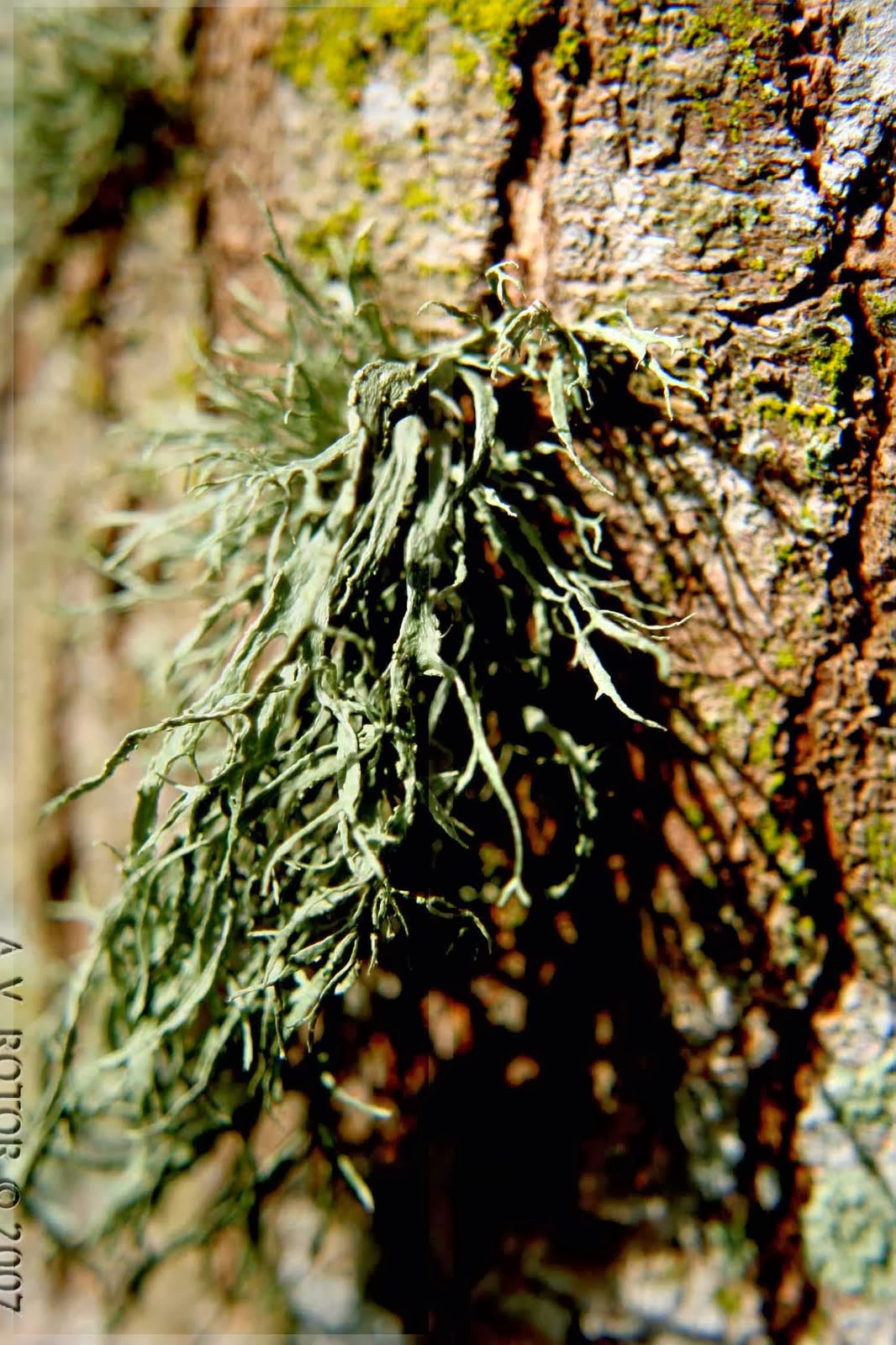
Norfolk Pine in Tagaytay bears on its trunk a carpet of Foliose and Squamous Lichens which are mistaken at first glance as a disease or parasite.  

The fact is, lichens play a symbiotic role with the host tree, a relationship whereby the lichens gain foothold that enable them to reach out for the sun and to occupy space with least competition with other organisms. One the other hand, the tree is protected from pest and effects of environmental change like drought.   

The lichen in itself is an interesting specimen.  A lichen is actually a group of two distinct genera of different kingdoms in the phylogeny of living organisms - alga (Kingdom Protista) and fungus (Kingdom Mycophyta) or in other cases bluegreen (Cyanophyta, Kingdom Monera) - living inseparably, a relationship developed through the long and uncertain process of evolution.  

Instead of each member developing its own adaptation, the two joined forces so to speak, in order for both to survive.  It is a perfect example of evolution through
cooperation, instead of competition as in most cases of evolutionary success. 

The alga being photosynthetic manufactures food which it shares with the fungus.  The fungus on the other hand, being saprophytic, converts organic matter back into elemental forms which the alga again uses. Such a relationship consists of an enduring cycle - season in season out, year in year out, covering a span of hundreds if not a thousand years. Such a feat is among the wonders of the living world. If the
Redwood or Sequioa is the longest living individual which is estimated to be up to three thousands years, the lichen is the longest living union (mutualism). 

The key to such success through mutualism lies not only in highly efficient nutrient exchange, but gas exchange principally CO2 and O2, as well. More so, for their ability to transform rocks into living mass which they share with other living things in their own time and in the future. They are the precursors of succession in the living world. Which points out to another evolutionary tool - benevolence - the sharing of resources albeit destructive competition. 

More than this general knowledge there is very little we know about lichens.  One thing ecologists are learning about lichens is the fact that they are a natural indicator, a sort of barometer, of environmental conditions.  They thrive best where the air is clean, temperature change is moderate, so with relative humidity, the vegetative cover undisturbed, the rivers and lakes full, etc.  And that lichens thrive best where man's intervention is least - if ever there is. 

Yet lichens are found in the most difficult areas like the Arctic and desert, on rock cliffs, even dilapidated and abandoned structures. Their resistance as well as vulnerability to changing environment has led scientists to use the lichen as a biological indicator.    

It leads us to the simple philosophy of a old man living near the summit of Mt Pulag in Benguet, reminiscent of the American philosopher Henry David Thoreau who lived by a pond (Walden Pond) deep in a woodland far away from town. 

Here on the country's second highest mountain, 'Tang Ben, when asked on how Nature is kept pristine - even without first explaining to him the scientific basis of diversity and balance - simply quipped with confidence and sparkle in his eyes.

"Just leave Nature alone."     
---------------------------------------
Lichens: Enduring symbiosis of algae and fungi living as one complex organism 

Lichens are indicators of clean air, in the order of increasing pristine condition:
crustose, foliose, fruiticose.

How do you rate the place you are living in?

Crustose lichen with juvenile fruticose lichen (branching)

Foliose lichen (leaf-like)


Fruticose lichen with false branching (right).
These are general types of lichens in increasing morphological complexity, the crustose being the simplest and the fruticose the most complex, which is often mistaken as moss and liverwort and even plant. Although governed by niches or boundaries, lichens of two kinds, or intermediate types as proposed by recent studies, are observed to be growing together in a state of dynamic balance heretofore barely understood. ~

--------------------------------------------------------
It has been estimated that 6% of the Earth's land surface is covered by lichen. Lichens are informally classified by growth form into:

· crustose (paint-like, flat), e.g., Caloplaca flavescens
· filamentous (hair-like), e.g., Ephebe lanata
· foliose (leafy), e.g., Hypogymnia physodes
· fruticose (branched), e.g., Cladonia evansii, C. subtenuis, and Usnea australis
· leprose (powdery), e.g., Lepraria incana
· squamulose (consisting of small scale-like structures, lacking a lower cortex), 

                      e.g., Normandina pulchella
· gelatinous lichens, in which the cyanobacteria produce a polysaccharide that absorbs 
                     and retains water.

The Two Worlds of the House Sparrow

 "I once had a sparrow alight upon my shoulder for a moment, while I was hoeing in a village garden, and I felt that I was more distinguished by that circumstance that I should have been by any epaulet I could have worn." 
                                                                                          -  Henry David Thoreau
 Dr Abe V Rotor
 
   sparrow dance  

Gordiun, that's how we call this bird in Ilokano, almost a password for us kids in our time with slingshots worn necklace style, our pockets bulging with carefully picked gravel stones. We were soldiers of fortune when the gordiun is fat at harvestime, and how we relished it grilled in today's term, and how we raided their nest and took its young. 

This bird is a product of co-evolution in rice territory - their life cycle jibes with that of rice - the traditional varieties that stay in the field for the whole monsoon season. And then comes October.  By then they number to hundreds, thousands over the horizon. What makes it worse is the gordiun is related to the maya, equally if not more destructive. raiding ricefields about to be harvested, stealing  grains from the mandala and the garung - a giant circular basket to keep threshed palay as buffer stock in today economic term. 

That's why our old folks allowed us to carry this deadly improvised weapon, traced to the history of David, with the enemy a hundred times more than a single Goliath - more elusive, more mean, more intelligent. 

Like its counterpart in the rodent world - the rat - the gordiun has likewise learned to live with humans, but never, never allowing itself to be domesticated - unlike the cat and the dog.  Not the gordiun, not the rat as well - two stubborn co-inhabitants in man's dwelling.  And the wonder of it all is that they can adjust to modern living, and in fact to today's postmodernism.  They live in cities among high rise and shanties, the rats on garbage, and the gordiun on food waste and pest.  

We were the Mark Twain kids of the fifties - the likes of Huck Finn and Tom Sawyer.  Like tme we were abandoned by time - shall be say, age - and ambition and industrialization and exodus to the city. We have surrendered ou weapons, so with the adventure and fun we were supposed to hand over as heritage to our children and the younger generation of today. 
Closeup of the house sparrow
Pavlov is undoubtedly correct when we talk of the resilience of instinct, its ability to cope with fear, deprivation and aggression for the sake of survival of the species as a whole.  That's how the gordiun - and all animals for that matter - succeed in adapting to the changing environment. 
 Closeup of the house sparrow 
But there is something strange going on, not anticipated by the great psychologist, similarly Darwin did not foresee the impact of modern science and technology: the steady annihilation of species to the point of extinction   In fact hundreds of species of the estimated millions have permanently perished, and more in accelerated pace will follow suit.

I look back as my Gordiun - the one that refused domestication, the one that played the most skillful hide-and-seek game, the most challenging target of our slingshots, the one that lives  up to 20 years among humans - not in the forest though, the one that never migrates in neither habagat or amihan - unlike the migratory birds of the north coming down south and returning after winter. And the one that is the symbol of joy and being carefree, yet the epitome to bonding as family and community. 

I have long dismissed the gordiun's destructiveness , and in fact explained to farmers and housewives, they do more good in housekeeping - picking morsels, ridding the place of vermin.  They are part of the food web and therefore help in maintaining the integrity of the ecosystem. They are insectivorous and predators, and they keep weeds population down that would otherwise compete with our crops, by eating their seeds during the off season. It is for this matter that their dispersal all over the world in all continents except Antarctica was assisted by man because they are excellent biological agents.  In general we have learned to accept them, as they have learned the same.  
 A flock of sparrow 
A change of human attitude crept in when the gordiun's population has dropped from the flock we used to watch and admire, the chorus of songs though inferior to the canary, and by their very presence alone that keeps us company. This is what is happening all over the world because of pollution, global warming, loss of habitat, pesticides and the like.

I watched a gordiun lost its way and ended up in our sala trapped.  It was raining hard and I said, you can stay here.  Restless, it rammed against the wall and ceiling, then perched nervously on the curtain looking at me long and hard.


Suddenly I became a boy once more - this time without the dreaded slingshot around my neck.~ 

Friday, September 1, 2017

Living Prism

Painting and Poem by Dr Abe V Rotor

Living Prism in the Deep in acrylic (24” x 43”) 2017

Sunlight splits into colors, the rainbow,
     through droplets hanging in the sky,
the deep among seaweeds where fishes play,
     letting time and the world go by.

Oh, how the seasons come and go at ease,
     ephemeral in our lifetime,
yet fullest in awe and wonder and joy,
     in the living prism in our prime.

In the golden years as the sun sets down,
     and into the deep its last rays soon die,
lingers, flickers the light saved by the day
     into beautiful dreams to live by. ~

Yes, you can bring down the rainbow - and touch it, too.

Rainbow - the cathedral in the sky that brings the faithful of all beliefs together in awe and respect to the Creator, the unifying grace of all mankind.
Dr Abe V Rotor
Morning rainbow across the hills and river in Bamban, Tarlac


Children in the neighborhood delight in making a rainbow through an aquarium as prism. You can make one, too, in your home.
Rainbow - a kaleidoscope of colors in a pattern of seven - red, orange, yellow, green blue, indigo and violet - that guide man's art in endless combinations.

Rainbow - it builds slowly before our eyes; it comes as twin, or breaks out suddenly perking up life in its low ebb, and taking out the boredom of living.

Rainbow - gauge of weather, reference for travel and trade, source of inspiration of lovers, bards and writers, subject of the arts, icon of faith and devotion.

Rainbow - the make-believe subject in children's stories of fairies and spirits; the most sought treasure of grownups - the proverbial pot of gold.

Rainbow - ephemeral for which its beauty in heightened, like a rose in the morning,
first rain in May, the passing of day and night, and the march of seasons.

Rainbow - likened to the cycle of life - its birth and death, glory and fall, its simplicity grandeur, its independence and attachment to all things, visible and invisible.

Rainbow - now you see it, now you don't, a puzzle to the old and young in all walks of life, yet seeing it best with a clear mind, pure heart and spirit.

Rainbow - it conquers gloom, sows hope, builds the biggest, the most beautiful and magnificent arch of the world that bestows honor to everyone.

Rainbow - the cathedral in the sky that brings the faithful of all beliefs together in awe and respect to the Creator, the unifying grace of all mankind.

Rainbow - too high, too far, too abstract, yet to the children it is near, it is real and true; rainbow the symbol of beauty and hope, it comes when the sky is gloomy and dark. ~


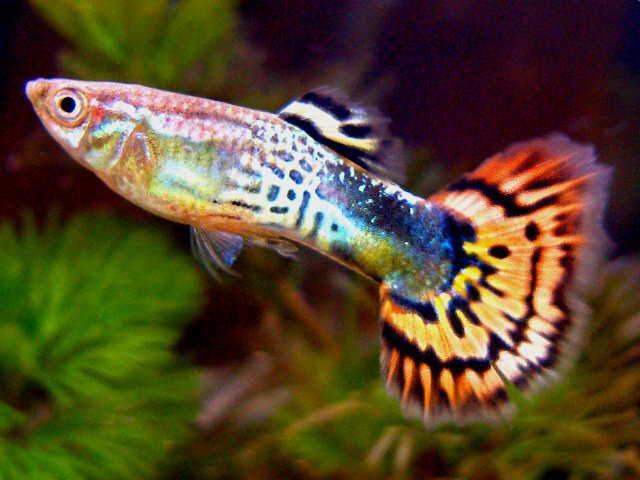
Rainbow comes down to earth in many ways - in flowers in spring, leaves in autumn, mountains at sunrise, reflection of lakes, spray of running streams, mirage in deserts, feathers of fowls, and the like. The rainbow is commonly imitated in man-made structures and designs, and many items of trade and commerce. Living things like this rainbow fish have captured through evolution the colors and pattern of the rainbow, assuring them of their place in the living world.

A Night of Music in a Garden

Dr Abe V Rotor
What makes a garden an ideal place for the relaxation may miss the eye. Beyond the beauty of flowers, of the diversity of life forms, and the coolness it brings to a tired soul, there is still one more thing a nature lover must not miss: a night of a music, courtesy of nature’s miniature musicians.

The field cricket (Acheta bimaculata); and katydid, (below) a long horned grasshopper (Phaneroptera furcifera), are the world's most popular fiddlers in the insect world.
I refer to these principal singers, the cricket (Acheta domesticus and Gryllus sp.) and the long-horned grasshopper or katydid (Microcentrum rhombifolium), all belonging to a large group, Order Orthoptera, in which the grasshopper is a typical member.

Since childhood I have always been fascinated by insect music. Stealthily, in many attempts, I tried to look for the singer; but on getting nearer to the source of the music, the singer abruptly stopped. I learned later that these insects are ventriloquists and a slight turn of their wings or bodies would deceive the hunter.

But not until I finally succeeded in pinning down with a flashlight the little Caruso in the middle of his performance.

He is well hidden behind a leaf, brown to black, compact and sturdy, nearly two inches long, with a long tail and a pair of antennae. His front wings are raised 45 degrees above his abdomen on which the hind wings are folded. This is the cricket’s fiddling position. Now he rubs the two leathery wings against each other in a back and forth motions, a process called stridulating, which inspired man to invent the violin. On closer examination the base of the front in lined with sharp edge, the scrapper, while the ventral side has a file like ridge, the file, which represents the bow of the violin.

And what about the stereoscopic sound effect? A pair of tympana, which are drum-like organs, found at the base of the front tibia, are actually ears which, together with the raised wings, serve as resonator, sending the sound to as far as a mile away on a still night.

Now let us analyze the music produced or is it only a sound, mistaken for some music qualities? A sound produced by a single stroke called pulse. Each pulse is composed of a number of individual tooth strokes of the scraper and file. Pulse rate is from four to five per second, but on warm summer night the rate becomes faster; thus, cricket are not only watchdogs (they stop when they sense an intruder), they are also indicator of temperature – and perhaps the coming of bad weather. It is for these reasons, other than their music, that the Chinese and the Japanese love them as pets.

The pulses of cricket are relatively musical; that is, they can usually be assigned a definite pitch, varying from 1,500 to 10,000 hertz, depending on the species. Those of the long-horned grasshopper or katydid are more noise like; that is, they contain a wide band of frequencies, including clicking and lapsing, and cannot be assigned to a definite pitch. The monotony of its sound must have led to the coining of the insect’s name, katydid-katydid-katydid…

There are three musical pieces the cricket play. Calling songs are clear crisp, and loud, which, of course, suit the intention when a female comes around and nudges the singing male, his music becomes soft and romantic, lasting for many minute to hours, and he forgets his role of warning of an intruder or telling of the coming of storm. Anyone who is love- struck is like that.

But worse can come all of a sudden. This sentinel falls silent as he takes the bride. And when another suitor is around, this Valentino takes a fighting stance and sings the Storm the Bastille, a battle song.

I came across studies on insect music. I began to take interest, imitating it with the violin. It is impossible and the audiospectrogram tells why. Biologically, only the members of the same species understand one another. No two species can communicate vis-à-vis this auditory means. This is one area in development biology, which has not been fully explored. How did this mechanism of species communication evolve? With computers today, can it be explored as an alternative and safe means of controlling destructive species? Maybe we can mimic the music a species produces to lure its members, then trap or eliminate them.

As the garden meets sunrise with fluttering butterflies, so does it enters the night with an array of concerto and orchestra music, and the garden becomes a place for meditation. I say that the music produced by this insect –whatever is the interpretation - is a sound of peace and a chant of praise for life itself. The chores of the day vanish easily, and I find the evening so relaxing and conducive to good sleep - and dreams.

The great Charles Darwin himself expressed his deep feelings for these night’s musicians in his book, “Cricket at the Heart”. He said, “I love it for the many times I have heard it, and the many thoughts its harmless music has given me.”

Carolus Linneaus was more affected by these insects. He kept them to send him to sleep. Japanese children delight in collecting them, as American children trap fireflies. Caged crickets are sold in shops. Haven’t I found a battery- operated caged cricket lately? Computer age! Poet David McCord laments, “The cricket’s gone. We only hear machinery.”

As for me, I still find peace with these humble companions in the night. x x x

Unlock the Secret Garden of our Lives

Dr Abe V Rotor

"Look at the beautiful Nymphaea flowers!” 

I gathered my students in humanities to see the rare sight, red, white, yellow, purple flowers rising out of the clear pond meeting the early sun, and peeping through the blades of cattails. The scene was perfect for photography.

Nymphaea, Claude Monet's masterpiece (1923) closeup

We made several shots - close-up, panoramic, aerial, foreshortened, silhouette, and a lot more. Hovering bees came, fluttered the butterflies of different kinds, resting still were dragonflies and damselflies. The photographs my students made were indeed beautiful, showing the youthfulness that these young artists possess.

However, when a guest photographer showed her own version of the Nymphaea
flowers, I realized there was something my students and I had not seen. Like poetry, her Nymphaea was telling us a message behind words. The flowers were peeping through the cattails (Typha). As we examined her photographs, we seemed to be seeing "flowers behind bars." It brought a sense of nostalgia definitely romantic, classic. I was reminded of a secret garden.

To many people the secret garden is the least trodden place. High walls surround it; the door is locked, and the key has long been forgotten.

It is The Secret Garden of novelist Frances Hodgson Burnett, who tells her readers that many of us know of a place which was once beautiful, but which we have turned our back against, fearing to visit it, much less to tear down the vines and weeds that have now covered it. We hesitate to make that garden beautiful again.

Some of us live unhappy lives because we fear to go into this secret garden again. Even the chirping of a bird that comes from across its walls brings sad memories instead of joy, and we do not even know that spring had come and gone.

But there are those, Burnett tells us, who take courage to unlock the gate to the forgotten garden and find in there something more, much more, than the beauty they had lost. Here they find new hope, peace, and quiet. They even discover a new person in themselves. They find time to reflect on the growth of buds on the leafless narra (Pterocarpus indicus L), which make for the tree a new canopy, even when the weeds and grasses around it have turned brown in summer. There are those who rejoice with the sudden bloom of chrysanthemum and cosmos as soon as the rains come, filling the ground with colors the same way cherry blossoms color the sky come spring. These people are not afraid of the thorns under the bright petals of the rose.

Mary, the principal character of The Secret Garden, woke up one morning to find the streaming light coming through the window. “Look at the garden!” She cried.

The rain and the warmth had made the new shoots push up through the earth. There were fresh clump of trees and purple, red, white, and blue flowers all around. She was breathless with happiness. A robin was building a nest. She called her friends, among them a lame boy who soon began to walk. The secret garden became very beautiful again. Since then its gate was always kept open for anyone who wished to enter.

A garden in a park or school, or a home garden, for that matter, can be this kind of garden - open to the inquisitive mind, the seeking heart, the longing spirit. It is a place of peace and quiet. It could be the opposite. The garden is a place for biological and social research. Here the seasons of the year are best observed in plants. They form ecosystems, which are basic to the relationships of living things, including those among people. One finds humility in plants; but there are plants that appear to be proud, as there are those that exude benevolence; there are plants that are parasitic. There are dominant species, there those that are frail and often dependent on bigger and stronger ones. Here we see a single tree the abode of countless organisms. We discover a mother bird in her nest. A colony of bees hang on a branch, cicada chirping, crickets fiddling. Beneath our feet are burrows of earthworms, tunnels of termites, a carpet of mosses, a bed of liverworts. Never is a garden truly idle, nothing is waste, and time is never prodding yet never dull.

Nature keeps a dynamic order; it is in diversity that there is unity. We may not fully understand this mysterious order of our world, and perhaps it is better not to probe it at all - for it is our deep faith in the maker of that garden that we are earns our place there to live in harmony with all creatures.