Thursday, April 17, 2014

Rediscovering the Medicinal Value of Insects

Rediscovering the Medicinal Value of Insects
Dr Abe V Rotor 
       Insects give us the sweetest sugar - honey, the finest fabric – silk, the purest light - firefly, reddest dye – cochineal, most lilting sound – crickets’ music, and strangest model of unity  - termite and bee colonies. Insects fill Ceres basket with fruits and vegetables through the magic of pollination which no other creatures can match.  And now they are moving into the front line of alternative medicine.

      A former co-teacher had been limping for some time. Then one day I met her briskly walking on the campus, her swollen arm hanging on a sling. “I got stung by bees,” she complained.

      I remember having read in Time Magazine that bee sting is good for arthritis and rheumatism.  In fact the number of clinics and doctors that use bee venom as an alternative medicine is increasing in number in the United States and other parts of the world. 

      The treatment is as simple as introducing the excited bee over the affected area, say, the knee or elbow.  By holding the struggling bee with forceps, its posterior needle is aimed at the infected area.  Once the needle is embedded the bee is removed, the sting with the attached poison sac is torn off leading to the insect’s death. (This is the same reason why the male bee dies after mating with the potential queen during the nuptial flight.)  The poison sac contracts rhythmically as more poison flows into the affected muscles and nerves.

      “Bee sting relieves arthritis and rheumatism,” I ventured explaining to the surprise of my co-teacher. “Why, it’s true!” she exclaimed. “Lately I've not been feeling tight joints and morning aches.” Jokingly she said she would like to go into honeybee keeping and get more bee stings. An article mentioned that beekeepers live active and longer lives. Some say occasional bee sting is good for the heart. Could this be true?

      Bee venom treatment attracts many patients who are conscious of the side effects of synthetic drugs.  In their testimonies they find it effective that many patients virtually hang their canes soon after the treatment. The relief allows patients to follow a regimen of exercise and controlled diet to help in healing.

--------------------------------------------------------------------------------------------
      Many kinds of insects have been reputed to possess medicinal properties The use of insects and their products in alternative medicine dates back to antiquity with the use of wild honey as poultice for wounds and infections other than its principal use as health food.
--------------------------------------------------------------------------------------------
Bee Extract
      In the first half of the last century there was a preparation known as “Apis” which is extracted from the bodies of honeybees.  The extraction is done by killing the insects in ethanol while they are intensely excited. The medium digests their bodies for a month at warm temperature. It is finally brought to a strength representing two ounces of bees to one pint of the medicine. This preparation has been used for the treatment of “hives,” diphtheria, scarlet fever, erysipelas, dropsy, urinary irritation, and all kinds of edema accompanied by swelling and burning.

      In an article, “The Remedial Value of Stings,” the author ER Roots reported that bee venom has been placed in the market in ampules is administered hypodermically thus giving the same effects as natural sting, minus the pain. Pre-testing for allergy is more convenient and doses are easier to adjust.  But such treatment is not popular among Filipinos although many of us believe in the herbolario, manghihilot and faith healer.   
  
  Mealy bug, Dactylopius coccus, source of prized red dye exclusively used 
historically by the Roman emperor and his court .  

Cochineal
      Another insect with medicinal value is a mealy bug, Dactylopius coccus that produces cochineal.  The insect is presently cultured commercially in Honduras, Canary Island, Mexico, Peru and Spain. Cochineal is extensively used as dye but lately it has been discovered to possess properties that allay pain, and it is reported to be effective in treating whooping cough and neuralgia.
 Heal Deep-Seated Wounds

      I was reading an account of a very rare case of insect use as a substitute for delicate surgery.  During the First World War, a certain Dr. W. S. Baer noticed that wounds of soldiers who had been lying on the battlefield for hours did not develop infections, such as osteomyelitis; much so unlike those wounds which had been treated and dressed promptly after combat. 

      The reason for this is: the older wounds were found to be infested with maggots.  These maggots are larvae of flies, commonly houseflies (Musca domestica) and blue bottle flies (Calliphora sp). The adult flies can detect the smell of blood and deposit their eggs around the wound, anticipating that their larvae will soon feed on the injured tissues.

Fly maggots therapy (Wikipedia)

      Doctors who have observed this phenomenon were surprised to find out that the maggots do “clean up” the wounds, especially the deep-seated ones, more effectively than ordinary surgical or antibacterial treatment! This discovery led to the practice of rearing maggots under sterile conditions, then introducing these clinically clean maggots into wounds, there to consume the microscopic particles of putrefied flesh and bone.  This practice, however, came to an end with the introduction of modern drugs and surgery. But to show how extensive this practice was, a survey conducted during its peak showed that 92 per cent of 600 physicians who had used this treatment reported favorably about it.

      A renowned researcher Dr. William Robinson was able to isolate a substance from the secretion of the maggots that, he believed, contain the healing effects on infected wounds.  This material is allantoin.  It soon became commercially available as its importance began to be recognized.
Allantoin
      Commercial allantoin is a harmless, odorless, painless, and inexpensive lotion which, when applied to chronic ulcers, burns and similar pus-forming wounds, stimulates local, rather than general, granulation.  It is very valuable in treating deep wounds such as bone marrow infections, where the internal part of the wound must be healed first.

      But allantoin solutions cannot be as efficient as using living maggots in the treatment of bone infections.  It is because the maggots actually eat out the necrotic tissue, and kill the pus-forming bacteria by digesting them.  In the process, the maggots continuously secrete minute quantities of allantoin in their excreta to the very depth of the wound especially where the use of surgical instrument is limited, if not dangerous.

      Except in very isolated cases, modern medicine has succeeded in shelving the practice of using maggots on wounds.

Cantharidin – A Cure All Drug and Aphrodisiac
      In our animal husbandry class, our professor, Dr. Rufino Gapuz, told us of a way to harness and calm down a cow that is in heat so that she can be safely brought to the corral for insemination.  This was in the sixties when artificial insemination was something new in animal science. There is an injection prepared from the body of the blister beetle, called “Spanish fly”, Lytta vasicatoria. (Photo, Wikipedia)

      This insect occurs in abundance in France and Spain, a relative of the American blister beetle. The beetle carries in its body cantharidin.  It was used as folk medicine during the 19th century for all sorts of ailments, and was very much used as an aphrodisiac.  At present it is used in treating certain diseases of the urinogenital system and in animal breeding.
A mild dosage ointment has been formulated from the blister beetle in removing warts.
---------------------------------------------------------------------------------------------
In the seventeenth century, some curative power was attributed to almost every known insect. For example, the bite of katydid or cricket is said to remove warts, cockroaches or earwig when dried and compounded will cure ulcer, weak sight, earache and dropsy. This is of course pure quackery and superstitious belief.
--------------------------------------------------------------------------------------------

Antibiotics and Anti-inflammatory Ant Secretion
      With the decline in the effectiveness of antibiotics as a result of increasing resistance of pathogens, the search for more potent ones has widened into   various fields, which today include plants, fungi, protists and   monerans.

      One potential source of antibiotics is the green tree ant -Oecophylla smaragdina (photo) - a member of the large order of insects Hymenoptera to which bees and wasps belong. Like their relatives the green tree ant that is locally known as hantik, lives in colonies.  This social behavior enables them to grow in numbers of hundreds or thousands in a single colony, which can remain active for a long time.   Other than its reported antibiotic property, the leaf nest of the green tree ant relieves inflammation when bandaged on the affected area.

      Insects, the most numerous and oldest of all animals, have many good reasons to be with us. They are part of nature’s healing system which helps us live happier and healthier lives. ~

How lonely can you get?

Overcoming loneliness and fear with creative artDr Abe V Rotor
Lesson: Learn to conquer your fears through the creative art of photography and poetry.

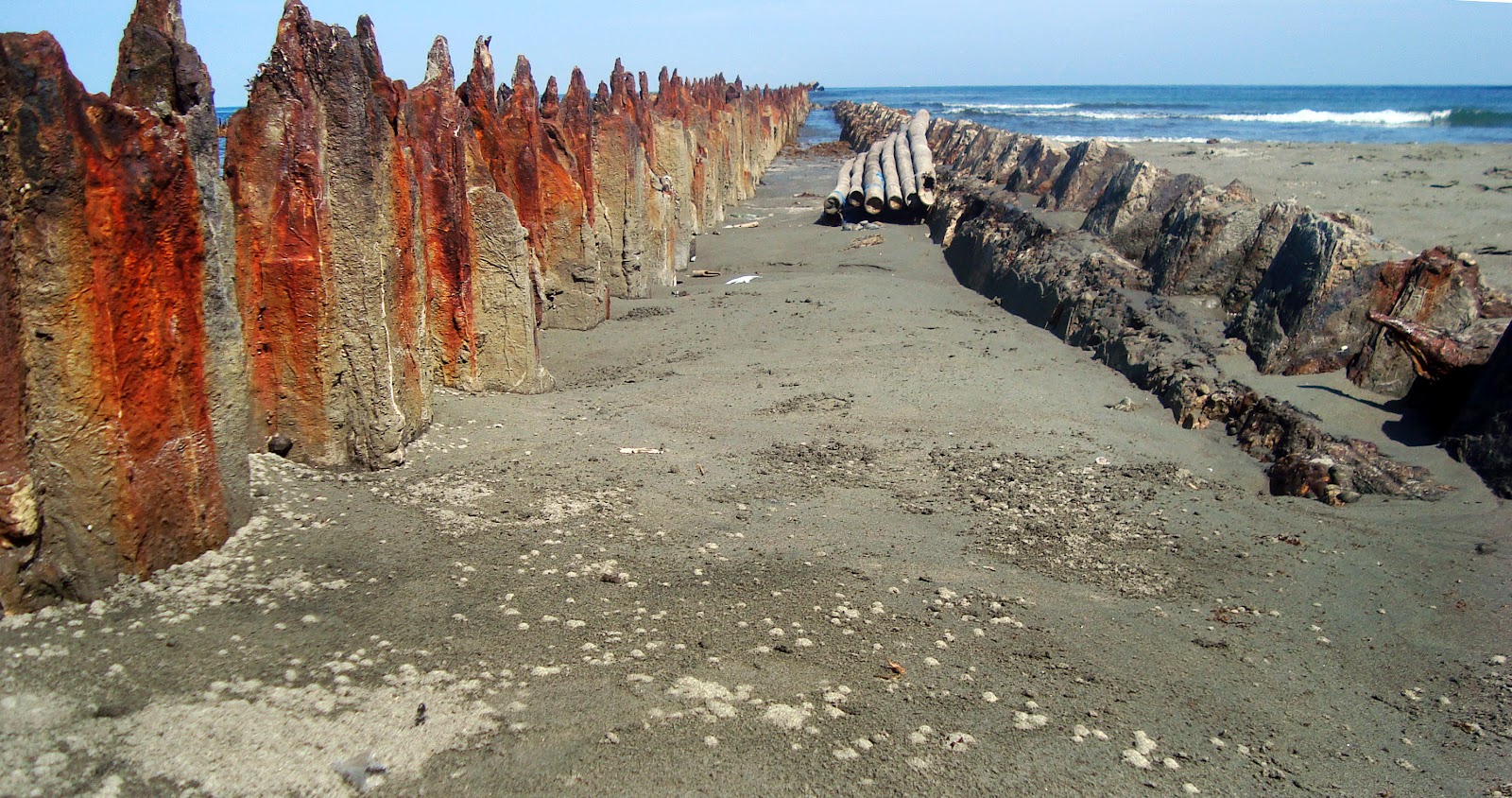
Sunken Pier, Sto Domingo, Ilocos Sur
A giant its teeth in gruesome stain!
     Where have all the children gone?
the old folks and the fishermen?
    The sweep of wind answers none.


UST, Manila 

Empty bench is all that sunrise greets
save the earthworm in its burrow,
after a full night's grind fulfilled,
earned its day's rest through,
and oh, that man should learn
to keep the clock holy and true,
though nil it is in this wide world,
his niche in his Creator's view.


Sacred Heart Novitiate, QC

As shy as the frangipani's bloom,
     whispers in the air a fountain;
the lawn breathes after its groom,
     waiting for the monsoon rain.


Canossa Retreat Center, QC 
Empty benches as the sun rises;
     and no soul around to find;
Empty benches hide in darkness,
     save some tears left behind.


 UST Botanical Garden
The artist works all by his thought,
     and builds a world his own;
alone his art slowly comes forth,
     like the coming of dawn.


Someone is knocking on my window pane,
dreary like the spirit I often dream;
it must be a raven or some naughty children,
wanting me to join in their game.

Sacred Heart Novitiate, QC

Sunday, April 13, 2014

Cockroaches eat on anything - almost.

Number One Pest in the Home
Dr Abe V Rotor
Living with Nature - School on Blog 
Paaralang Bayan sa Himpapawid with Ms Melly C Tenorio 
 738 KHz DZRB AM Band, 8-9 evening class, Monday to Friday


American cockroach (Periplaneta americana) is most commonly found in the tropics
True. Being omnivorous, cockroaches voraciously consume all kinds of materials that are rich in carbohydrates, proteins, fats and oils. But when these are not available they turn to unlikely food source like soap, photographic film, clothes, wood and drugs. In fact they even turn into predators, devouring other insects, and sometimes biting people in their sleep. Their bite often gets swollen and infected. Cockroaches are found in all places where humans live and conduct his trade, commerce and industry. Only rats can be compared with the tenacity of the cockroach.

The cockroach has very powerful digestive enzymes: proteases digest protein, invertase breaks complex sugar, and amylase breaks starches. Its saliva contains powerful enzymes coming from the gastric caeca, while the Malphigian tubules secrete an enzyme that is equally disgusting. It is no wonder that just a single frass (feces) can spoil a whole pot of rice by its obnoxious smell. 
The cockroach has not changed for the past 40 million years or so.  It is therefore a living fossil.

By the way there are three most common species that we encounter in the home and public places. These are the American cockroach or Periplaneta americana (large, rust red with a yellow band across its thorax), the German cockroach or Blatta germanica (pale yellow, only one-third the size of the American species) and the oriental cockroach or Blatta orientalis (dark brown to black, the biggest and filthiest of all cockroaches.)

Meticulous sanitation is the best way to get rid of cockroaches. To keep their population down, sprinkle carbamate (Sevin) on the kitchen floor, pathways and possible hideout of the pest, preferably before retiring at night. Keep doors and screens properly closed to prevent entry of the insect. 

 Life cycle of American cockroach (hemimetabola - egg, nymph, adult)
 A community of American cockroach.

                                           Three most common species 

How to minimize cockroaches at home and workplace. (CLIPS)
  • Cleanliness - cockroach is a barometer of housekeeping 
  • Lighting - cockroach is nocturnal. Vigil light keeps them at bay. 
  • Isolation - screen, cabinets and drawers, containers
  • Protection - kill or repel with derris, pandan mabango, chemical (carbamate like Sevin), traps
  • Starvation - get rid of droppings, morsels, leftovers
Acknowledgement: Photos credit: Internet

Tuesday, April 8, 2014

Palm Sunday - Nemesis of Palm Trees and Cycads


Dr Abe V Rotor
Living with Nature - School on Blog
Paaralang Bayan sa Himpapawid with Ms Melly C Tenorio
738 DZRB AM 8 to 9 Evening Class, Monday to Friday
Faithful of the Christendom wave young fronds of buri, a threatened species; and oliva or Cycad, a highly endangered species, in observance of Palm Sunday. 
More than ninety percent of the palaspas are made of the buds or immature leaves of palm trees principally buri, anahaw, and coconut. Coconut trees are purposely stripped for palaspas and their heart is made into fresh lumpia.  Otherwise the trees are left to die in the grove.  As a consequence the destructive rhinoceros beetles, and pathogenic fungi breed in them, and build populations that destroy many standing trees.   

Buri, on the other hand is already a threatened species in the Philippines and in most tropical countries. The leaves are woven into mats, bags and other handicrafts. It is the young tree that is harvested for palaspas, ending the tree's potential life span of fifty years. It is not easy to propagate buri because it bears nuts only once it its lifetime - just as it's going to die. 

Survivors of  Palm Sunday takes time to recover.  It takes months to normally recover, and if harvesting of nuts is every two months, the affected trees may yield only half as much.  But then Palm Sunday comes next year, and every year thereafter. Thus we wonder if ever the tree will live a productive life of twenty to thirty years. 

I have a coconut tree at home.  We have been harvesting buko nuts every two months since 1979 when we moved into the subdivision - that's a good thirty three years (plus 5 years earlier). On the average our harvest is twenty nuts per bunch or forty buko nuts per harvest - that's four hundred pesos at 10 pesos each, city price.  Gross value per year is P2,500, based on six harvests. All these come from a single coconut tree.  

Coconut farmers may be getting more, plus the value of midribs for walis tingting, leaves for sinambong basket, woven mat, activated carbon from the shell, coir for cordage, dusts for the garden, and of course, firewood.  We have not mentioned tuba, lambanog, suka, muscovado, pulitiput, as cottge industry products from coconut. Then the ecological importance as windbreak, and companion crop of orchard trees, and a variety of cash crops.  When planted all together we see a farm model envied the world over - storey cropping.  The model is easily a 3-storey cropping to 7-storeys, one for the Book of Guiness. 
It is irony when faith collides with reality, when the spirit and body are separated by blind devotion, when the future is made bleak by one celebration, when the faithful turns into a bandwagon when unity and cooperation is already established, when faith becomes a stumbling block to a better life. 

Oliva (Cycad) is a living fossil, older than the dinosaur; now it is in the list of threatened species, in other places, it is placed as endangered. Usually the whole crown is harvested for Palm Sunday's palaspas, causing the plant to starve and die. 
Lower photo shows symbionts (fern, moss, lichen orchid, including insects and fungi) that live on the trunk and peduncle of the cycad, thus forming a community we may call as localized ecosystem.  


On the other hand Palm Sunday is key to progress, to the preservation of nature, and healing of our planet. It can be made more more meaningful by planting palm trees instead.  There is good sign here.  In other countries there are churches where the people bring seedlings of palm trees, cycads, and other plant species as well. The seedlings are blessed the same way the palaspas is blessed.  There is one big difference, and this is the key.  The faithful bring back the blessed seedlings in be planted in their homes.  Others join community tree planting in plaza and parks, along roads and highways.  Others organize replanting of destroyed forests, and reclaiming wastelands. Because the seedlings are blessed there's a accompanying   responsibility and concern for their growth. Subsequent Palm Sunday celebrations in one particular feature, are held where Palm Sunday seedlings were previously planted.

The Lord will be very happy of this development.

For the last fifty years I have been campaigning in saving the palms and cycads on Palm Sunday,  starting as a student. Throughout my career as radio instructor, columnist of local magazines, and university professor, I have been consistent with it.  There are more and more people who agree with the idea and have joined the campaign. This is encouraging.  But it has not broken ground yet, as these photos here will bear me out.

Talking with the clergy, I asked apologetically, "Father, is it possible to have only the green and mature palm - not the bud leaves (white), blessed? And not the oliva, too?" The religious ambiance soon engulfed the air and the conversation led into the story of the passion of Christ. ~

Tuesday, April 1, 2014

How Bacteria Become More Resistant to Antibiotics

How Bacteria Become More  Resistant to Antibiotics
Dr Abe V Rotor

When Alexander Fleming discovered antibiotics in the early 19th century, the world rejoiced at this wonder drug that was to become the most effective cure against bacterial diseases, from skin infection to tuberculosis.

Antibiotics refers to any material that destroys or inhibits the growth of pathogens. It may be derived from fungi such as Pennicillin notatum, (the mold Fleming accidentally found), or natural substances present in plants such as allicin and aliin in garlic (Allium sativum). Today, antibiotics are available through many brands, ending in “mycin” (like streptomycin and erythromycin).

Sir Alexander Fleming (6 August 1881 – 11 March 1955) was a Scottish biologist, pharmacologist and botanist. He wrote many articles on bacteriology, immunology, and chemotherapy. His best-known discoveries are the enzyme lysozyme in 1923 and the antibiotic substance penicillin from the mold Penicillium notatum in 1928, for which he shared the Nobel Prize in Physiology or Medicine in 1945 with Howard Florey and Ernst Boris Chain. 
--------------------------------------------------------------
Antibiotics brought hope to patients suffering from once incurable diseases such as venereal diseases, small pox and leprosy. During World War II, antibiotics saved countless lives.
--------------------------------------------------------------
When antibiotics was first used as chemotherapy following successful experiments against infectious diseases, the problem of creating antibiotic-resistant bacteria was never considered seriously. The fact is that bacteria, like other organisms, have the ability to develop resistance against certain substances, especially if these are repeatedly used. This same principle explains the buildup of insect immunity to insecticide. If we overuse this substance, next time we spray mosquitoes or cockroaches, we may need a more potent pesticide to do the job.

Biological Specialization
Imagine a population of bacteria crowding themselves inside of an injured tissue. Ideally, the application of an antibiotic will wipe out the entire population. But this is not always the case. Sometimes there are survivors. These survivors pass on their acquired resistance to their progeny. To eradicate the survivors and their progeny, you need to apply a higher dosage of antibiotics, or shift to a more potent kind. As this is repeated continuously, the bacteria continues to gain renewed resistance.

Thus we hear about doctors prescribing higher dosages for our recuperation, or extending the treatment time period. In many occasions, doctors prescribe different and, purposely more potent antibiotics. Today we speak of “second generation” antibiotics that eliminate bacteria resistant to antibiotics of the “first generation” (penicillin) group.

Self- Medication Creates Resistant Bacteria
The emergence of resistant microbes is exacerbated by human self-medication, since many antibiotics products are available over the counter. With any symptom of infection, whether viral or bacterial, we immediately confront it with antibiotics without getting a prescription. This is wrong. In the first place, antibiotics is not effective against viruses, only against bacteria. Therefore, influenza cannot be treated with antibiotics; it is the secondary bacteria infection that the doctor targets when administering antibiotics. There is a prescribed dosage and period of treatment based on laboratory tests. The condition of the patient must also be factored in the cure as he may be prone to bacterial infection which attacks the respiratory system, causing pneumonia. There are also side effects of antibiotics that may impair organs such as the kidney and liver. All these are considered by doctor when prescribing antibiotics.

Mass media is partly to blame for the misuse of antibiotics.
Advertisements show patients helpless when they are not attended to immediately with antibiotics. A person with a scratch reaches for antibiotics. Over zealousness for sanitation in the office, home, hospitals, often times includes many kinds of germ-killing compounds. Antibiotics becomes a part of our every life. Overheard were some men allegedly taking antibiotics capsules before entering a red light district. It is as if the prefix, anti, gives an assurance of protection.

Mechanics of Resistance Acquisition
Bacteria’s rapidly increasing incidence of drug resistance to antibiotics is now recognized worldwide as a serious threat to the treatment of life-threatening infections. Such resistance will result into genetic changes where the selection process is made through the use of anti-microbial drugs. The initial appearance of a resistant bacterium in a susceptible population is often caused by mutation in a single bacterial gene. The frequency of such initial mutation may be low, occurring at a rate of one mutation in a population of several millions. However, other bacteria can become antibiotic-resistant at a much higher level of frequency merely by acquiring a gene from an already resistant bacterium. The resistant genes can be passed on from one individual bacterium to another by transformation (genetic modification of a bacterium by incorporating freed DNA from another ruptured bacterial cell), conjugation (fusion or union of two bacterial cells) and transduction (transfer of genes from one microorganism to another by viral agent).

Here are the three phases of development of resistant bacteria.
(A) Mutation of a single gene in one member
of a population of millions of bacteria.

(B) A bacterium can acquire the mutant gene.

(C) The gene for resistance can be transmitted
or passed on from one organism to another
by transformation, conjugation or transduction.

Resistant Bacteria in Gastrointestinal Tract of Meat Eaters
In her doctoral dissertation at the University of Santo Tomas, Vicky Conception Mergal discovered that drug-resistant strains of Enterobacter and Escherichia coli bacteria found in human gastrointestinal tracts are indirectly related to ingestion of meats conditioned to antibiotics. In her study, Dr. Mergal divided her respondents into two categories. One group consisted of vegetarians and the other group of regular meat eaters. For the first group, the incidence of drug-resistant bacteria is very low. But in the second group, the meat eaters, she found the presence of drug-resistant Enterobacter and E. coli to be unacceptably high.

Overuse of Antibiotics on Poultry and Livestock
As a general procedure, poultry, hogs and livestock are consistently given high rations of antibiotics as feed additives. This is to safeguard the animals from possible pestilence or outbreak of diseases. Without it, whole ranches could be wiped out by foot-and-mouth disease, or rows of poultry farms felled by corriza, or pens of high breed pigs decimated by scouring. The animals do not actually need antibiotics, but to protect their huge investments, businessmen introduce this medication nevertheless. In reality, animals have their own defense mechanism of natural immunity.

When people consume commercially raised meats, they, too, develop a resistance to antibiotics. To kill the resistant strains in our bodies, higher dosages or more potencies of antibiotics will be needed.

Residual Antibiotics in Bad to Our Health
Remember, when you consume pork, beef, chicken, eggs or milk from animals treated with mega doses of antibiotics, you become a repository of antibiotic residues you do not need. When you do get sick, more medication will be needed to get you well. The presence of antibiotics inside us invariably takes over the functions of our immune systems. In the event that the supply of antibiotic residues stops, we become predisposed to infection and related kinds of diseases because there is nothing to suppress the resistant bacteria in our bodies.
 
 Nature has its own way of dealing with man’s folly. In this instance, it is the emergence of resistant organisms that threatens man himself. ~

Penicillin--based antibiotics do not respond anymore to common infectious bacteria. Note the absence of “antibiosis” around this culture of Staphylococcus.

Sunday, March 30, 2014

Musical Summer for Kids - and Grownups, too

 Musical Summer for Kids - and Grownups, too
Musical Summer for Kids - and Grownups, too
Dr Abe V Rotor
Piano recital in the home with relatives and guests
The violin, the soulful and classical instrument, perhaps the most admired, too.  
It's a  potpourri of notes this trio play with the violin and the uke.   
Guitar and Ukulele  offer the young enthusiast a choice. 
It's the uke many children love to start with. 

Summer is the shortest season for kids; they don't know when it starts and ends, and in between - there is never a dull moment, like marching too fast to go along, and too soon to reach the destination;

Summer is musical with the gusts of wind tamed into breeze by the trees, hissing, whispering, shaking the old ones to the ground into a pile of litter, inviting passersby to stop and rest in the tree shade; 

Summer is musical with peals of thunder like distant drums and gongs, getting nearer and nearer each time, lighting flashing, and soon the sun is blocked, overcast reigns in a strange music of  gloom;

Summer musical with children flying kites in lilting joy, kites soaring in crescendo and cantabile, string taut in notes and tunes, audible by the touch of the hand, receiving messages from up high;

Summer musical with kids learning to play the violin, the soulful instrument of all time - string, wind, percussion -  and blending with any, or all of them, under the baton of a seasoned maestro;

Summer musical with kids abandoning for the time being the computer, the mall and loafing, learning the fundamentals of good music, and differentiating it from the postmodern noise-music version;

Summer musical with kids barely reaching the keyboard, hard at carrying and beating the drum, short of breath to reach the high notes, too thin a voice for modulation, yet wish they were on stage; 

Summer musical is replaying classical musical movies like The Sound of Music, My Fair Lady, Oliver, Noli the Musical, Les Miserables, The King and I, Mary Poppins, this time with keener perception and interest;

Summer musical is attending workshops, getting tutor lessons, qualifying for membership in a band or orchestra, performing live before select audiences, at the grassroots and in rural communities;    

Summer musical is meditation with the sound of nature drowned in the city jungle, music that calms the heart from too much work and study, to appreciate the value of beauty and freedom, shared and enjoyed by all. ~   

Our Promising Labrador-Siberian Dog

Dr Abe V Rotor
 
Chicklet is a cross of Labrador Retriever and Siberian Husky.  Carlo walks Chicklet regularly in the neighborhood.  
 A pet dog needs a spacious and well-ventilated, safe and secure pen. 
To be the master of your dog; it must recognize you as head of the pack.  

If you receive a gift - a puppy half-Siberian, half-Labrador, what would you do?

You will like it, Papa, said Marlo my eldest boy who came for a visit, handing over the shy innocent baby canine. And who wasn't glad in the family?

I imagined, remembering some movies I saw, working dogs up in the Arctic, pulling sleds the way bullocks do in the tropics, or reindeer in the Lapland. Dogs retrieving ducks during hunting season. She will grow big and useful, Papa. Marlo assured me, now in my past seventies. Maybe I thought I would be needing a companion dog, not necessary a working dog; a watchdog at least.  

Just like Nikko, our Doberman for 15 years that died three years ago, Leo my youngest boy, was in approval. I'll take care of her, Papa. And took the shy puppy into his lap.  Let's think of a name. We looked for a name in the calendar.  St Bernard. No, that's another breed.  St. Gertrudes.  No, that's a breed of cattle. Let's just call her Chicklet.  Why not Pepsi, it's easier to pronounce and to call. 

Since then everyone called her Chicklet.  Quite often I mistakenly called her Pepsi, and she would likewise respond. Mackie, our baby grand daughter was simply amazed. Until it got vaccinated from rabies we kept Chicklet isolated. Her home? The pen of our late Nikko. Oversize for a puppy.

A month passed, she doubled in size. Three months.  She was as big as our Ten-Ten-Ten, an Askal dog that found refuge in our home on the tenth of October 2010.  Hence his name.
Perfect playmates.  Neither one wins nor loses. 

She's now on her fifth month.  She has grown big and strong.  I wonder what make a crossbreed special.  So I did not research.

The Labrador dog in Chicklet began to show. 

The Labrador Retriever, also known as The Labrador or Lab, is one of several kinds of retrievers, a type of gun dog, even-tempered and well-behaved around young children and the elderly. Labradors are athletic, playful, and the most popular breed of dog by registered ownership in Australia, Canada, New Zealand, the United Kingdom, and the United States. 

A favorite assistance dog breed in these and other countries, Labradors are frequently trained to aid people who are blind and people with autism, act as therapy dogs, and perform screening and detection work for law enforcement and other official agencies. They are prized as sporting and waterfowl hunting dogs. England is the country of origin of the Labrador. (Wikipedia)

Every time  Leo Carlo (photos) would take Chicklet for a walk in the neighborhood, heads turned to inquire, others would guess - Siberian Husky.  Leo would just nod.  What is it in Chicklet that is Siberian?
j    
The Siberian Husky or "Sibirsky husky" (Russian) is a medium to large, dense-coat working dog breed that originated in north-eastern Siberia, recognizable by its thickly furred double coat, sickle tail, erect triangular ears, and distinctive markings.

Huskies are an active, energetic, and resilient breed whose ancestors came from the extremely cold and harsh environment of the Siberian Arctic. Siberian Huskies were bred by the Chukchiof Northeastern Asia to pull heavy loads on long distances through difficult conditions. The dogs were imported into Alaska and later spread into the United States and Canada as sled dogs and later as family pet and show dogs . 

Breeds descending from the Eskimo dog or Qimmiq were once found throughout the Northern Hemisphere from Siberia to Canada, Alaska, Greenland, Labrador, and Baffin Island. With the help of Siberian Huskies, entire tribes of people were able not only to survive, but to push forth into terra incognita. Admiral Robert Peary of the United States Navy was aided by this breed during his expeditions in search of the North Pole. (Wikipedia)

Chicklet by comparison with human longevity is one year old now.  She is learning obedience. By two (14 in humans) she will enter the age of puberty.  By three (21 years in humans) she will become assertive in the role taught her. She will prove her loyalty. This will make her a good guide dog. Caring and trusting, especially with kids.  We are seeing in her such tendency. 

Will she be a working dog?  Not really, not a sled dog. Retriever, perhaps.  She loves catching balls, as well as disarranging (retrieving) things playfully. She is going to develop right conduct. She would be accompanying us in our rounds, going to church, to market, or simply on a walk.    

Too early to say yes, to all these, and others as well, in certainty.  Already Chicklet is a dog-rooster in the morning; her barking wakes the neighborhood.  She likes to walk with Leo Carlo, first in the vicinity, now even outside the neighborhood. A breed for the cold region? Yes, she takes a bath by herself.  Just give her a basin of water. Does she howl like her forebears in the vast Arctic?  No but her barking sends other dogs howling. Does she play rough? Yes like English rugby, and Canadian Hockey. But it's all game.

One time my patience reached an end at Chicklet's insubordination.  She refused to stop barking. It disturbed our peace and sleep. No scolding would help. I didn't spare the rod. She yelped and surrendered in genuflection. The next time she got her punishment she laid prostrate, motionless, meek as lamb. 

I carried her to her pen. She looked at me in total submission. I am the leader of the pack. Imagination took me to the lands of the Labrador Retriever and the Siberia Husky. ~