Wednesday, May 15, 2013

High Noon


Dr Abe V Rotor 

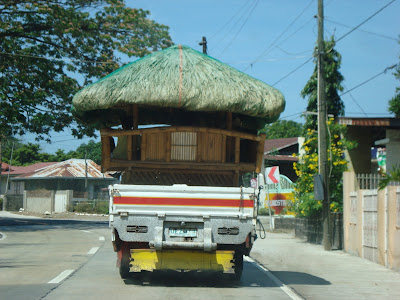
Inside a chapel in Metro Manila 

Beyond the maddening crowd,
a niche where the brave is bowed. 

Thursday, May 9, 2013

The Power of Black & White Photographs

Dr Abe V Rotor
Black and white captures the true color of this dog. Tenten at home, QC
 Agoo La Union cathedral: architecture against cloudy sky
 B & W enhances sharpness
Microscopic study of plankton (30X magnification)
Takong, native sow, Agoo, La Union 
Epiphytic Drynaria fern on acacia
Rock promontory in Mandaon, Masbate
Sta Maria Beach, Ilocos Sur
Friendly eagle at Avilon Zoo, San Mateo, Rizal
Herons on the ricefield in Sudipen, La Union  
Old sampalok tree, San Ildefonso, Ilocos Sur
Break time, UST, Manila 
Pine tree skeleton, Baguio City
Dying camphor tree, UST Manila
Old tree and its shadow 
UST Main building
UST Pharmacy Garden 
Walking stick, UP Museum of Natural History, Mt Makiling Laguna 
Sea urchins at play in Camindoroan, San Juan, La Union
A pair of water buffaloes (carabao) beating summer in Agoo, La Union

Kids at play in Calatagan, Batangas
Sugarcane mill chimney at night, Calatagan, Batangas
San Juan (LU) parish church 
Tagaytay Zoo visitors
A group of cicada attracted by a singing male, topmost (females are dumb), former ecosanctuary, SPUQ

Thursday, April 11, 2013

I Love Folk Art Industries

Dr Abe V Rotor
Living with Nature School on Blog
Paaralang Bayan sa Himpapawid with Ms Melly C Tenorio
738 DZRB AM Band 8 to 9 evening class, Monday to Friday
Ethnic floral art: Bouquet made of dried leaves, stems and other plant parts.  Mt Makiling, Laguna  
Damili or earthenware: flower pot, feeding trough, fence turret, glazed jar, animal figurine, cooking pot, etc. Sudipen, La Union
Bahay Kubo or nipa hut is perhaps the most popular representative of Philippine folk art. It comes is various models and sizes. It is ecologically friendly, and adds quaintness to a garden or rooftop.  Along Santa, Ilocos Sur
Bamboo craft: basket, duyan (hammock), chicken nesting basket, baby cradle, head wear,  and the like. Urdaneta, Pangasinan

Folk Art Industries

Functional for day to day use,
practical and affordable;
materials locally available,
technology transferable.

Daily chores easy and gay,
other works too, enjoyable,
maintenance virtually free,
depreciation negligible.

Buffer to economic recession,
answer to wastefulness,
alternative to frivolous living
of aesthetic uselessness.

Simplicity in make and design,
it’s people’s art for simple living,
rising above inequity and poverty;
to peace and understanding.

Indigenous expression of art,
culture, history, tradition,
preserving the age-old values,
generation after generation.

Livelihood of the masses
with whole families working,
bonding with the community,
with Mother Nature’s blessing. ~ 

Friday, April 5, 2013

The Mysterious World of the Bagworm


Dr Abe V Rotor


Shot holes caused by bagworm (Cryotothelea heckmeyeri) besiege a talisay tree (Terminalia catappa), Cebu City 

 Pagoda bagworm, Crypothelea hekmeyeri Heyl., in pseudo colony on duhat leaf; enlarged side view of the pagoda-shaped insect (below).


Sheepishly she peeps from under a pagoda she built;
Like the turtle she hides, creeps ‘til finally ceases to eat.
A Venus de Milo she emerges, sans wings she must wait,
Love scent in the air she urges a winged groom her mate.

She lays her eggs in the tent, broods them ‘til they hatch,
With heart’s content; leaves and dies after the dispatch.
To the Great Maker, life’s full of sacrifice and obligation;
Mother keeps young and home, the species’ bastion.

- AV Rotor, Bagworm
Light in the Woods, 1995

My pastime reading under a spreading duhat tree standing at the backyard of our old house was disturbed one summer. This favorite shady spot almost disappeared as the tree my father planted before I was born completely shed its leaves. Our yard turned into a litter of leaves. Our tree appeared lifeless.

Summer is when this tree is a deep green canopy, loaded with flowers and luscious, sweet fruits, and laughing children, their tongues and hands bearing the stain of its black berries.

The culprit cannot be the drought spurred by El Nino, I thought. Duhat is highly tolerant to prolonged dry spell, because its tap roots can reach deep seated ground water.

Even before I discovered the culprit - a shy insect protected by a pagoda-like bag - my children had already set up a field laboratory in their a tent, complete with basic research tools, and books of Karganilla, Doyle and Attenborough. For days our backyard became a workshop with the touch of Scotland Yard, Mt Makiling and Jules Verne.

My children called the insect living pagoda because of the semblance of its house with the Chinese temple, and because of its turtle-like habit of retreating into its bag. Leo, our youngest fondly called it Ipi, contracted from “insect na parang pagong at pagodang intsik”.

Ipi belongs to the least known family of insects, Psychidae, which in French means mysterious. Yet its relatives, the moth and the butterfly, are perhaps the most popular and expressive members of the insect world.

Curious about the unique bag and how it was built by such a lowly insect, Matt and Chris Ann worked as research partners. They entered their data in a field notebook as follows:

1. Base diameter - 2 cm
2. Height of bag - 2 cm
3. No. of shingles on the bag - 20
4. Size ratio of shingles from base to tip – 10:1
5. Basic design – Overlap-spiral

We examined the specimen in detail with a hand lens and found that the bag has several outstanding features. My children continued their data entry, as follows:

1. Water-resistant (shingle roof principle)
2. Stress-resistant (pyramid principle)
3. Good ventilation (radiator principle)
4. Light yet strong (fibrous structure)
5. Camouflage efficient (mimicry and color blending)
6. Structural foundation - None

The pagoda bag has no structural foundation, I explained. It is carried from place to place by a sturdy insect which is a caterpillar, larva of a moth. Beneath its pagoda tent, it gnaws the leaf on the fleshy portion, prying off the epidermal layer to become circular shingles. Using its saliva, it cements the new shingles to enlarge its bag, then moves to a fresh leaf and repeats the whole operation. As
the larva grows, the shingle it cuts gets bigger,

This is a very rare case where construction starts at the tip and culminates at the base, noted my wife. Remember that the structure is supposed to be upside down because Ipi feeds from the underside of the leaf, I said. “An upside pagoda,” our children chorused.

As Ipi grows, the shingles progressively increase in size and number, thus the bag assumes the shape of a storied pagoda. Thus there are small
Pagodas and larger ones, and varied intermediate sizes, depending on the age of the caterpillar which continuously feeds for almost the whole summer during which it molts five times.

If there are no longer new shingles added to the bag it is presumed that the insect had stopped growing. It then prepares to pupate and permanently attaches its bag on a branch or twig, and there inside it goes into slumber. The attached bag appears like thorn as if it were a part of the tree, and indeed a clever camouflage on the part of the insect. Here suddenly is a parasite becoming a symbiont, arming the host tree with false thorns!

My children's curiosity seemed endless. I explained that like all living things, bagworms have self-preserving mechanisms. They must move away from the food leaf before it falls off. They must secure themselves properly as they tide up with their pupal stage. After a week later they metamorphose into adults. Here on the twigs and branches they escape potential predators. Here too, the next generation of newly hatched larvae will wait for new shoots on which they feed.

Matt picked one bag after another to find out what stage the insect is undergoing. I recalled my research on Cryptothelea fuscescens Heyl, a relative of C. heckmeyeri, the pagoda species. Chris Ann took down notes

1. Specimen 1 - Bag is less than 1 cm in diameter, caterpillar in third instar (molting), voracious feeder.

2. Specimen 2 - Bag large, construction complete, insect in fifth or sixth instar, morphological parts highly distinct, head and thorax thick, three pairs of powerful legs.

3. Specimen 3 - Insect in pupal stage, expected to emerge in one week, chrysalis (skin) full, dark and shiny. Feeding had completely stopped.

4. Specimen 4 - flag empty, opening clear, chrysalis empty.

5. Specimen 5 - Bag contains eggs laid on cottony mass, chrysalis empty.

The last specimen is intriguing. Where is the insect? Why did it abandon its lifelong home? A puzzle was painted on the face of our young Leo. So I explained.

Let us trace the life history of Ipi and its kind. Both male and female bagworms mature into moths. The winged male upon emerging from his bag is soon attracted by love scent emitted by a waiting female moth still ensconced in her bag. The scent is an attractant scientists call pheromone. Then in the stillness of summer night, her Romeo comes knocking. Without leaving her bag she receives him at an opening at the tip of the pagoda bag. A long honeymoon follows, but signaling an ephemeral life of the couple.

The fertilized female lay her eggs inside the bag, seals it with her saliva, then wiggles out to the outside world but only to fall to the ground - and die, because Nature did not provide her wings!

“Poor little thing,” muttered Cecille apparently in defense of the female species. “Nature did it for a reason,” I countered, “otherwise we would not have bagworms today.” The wingless condition of the female bagworm is the key to the survival of the species.

The sun had set, the litter of leaves had been cleaned up. And the silhouette of our leafless duhat tree against the reddening sky painted gloom on our subject. As dusk set in, I noticed nocturnal insects circling the veranda lamp. A moth paused, then passed over our heads and disappeared into a tree. “Bye, bye,", cried Leo Carlo.

Summer was short, the rains came early and our duhat tree developed robust foliage. Cicadas chirped at the upper branches and an early May beetle hang peacefully gnawing on young a leaf. I was reading Rachel Carson’s Silent Spring when a gust of wind brought down a dozen tiny bagworms hanging on their own invisible spinnerets. My children were aroused from their reading of The Living Planet.

We had unveiled the mystery of the pagoda bagworm, but above anything else, we found love and appreciation on the wonders of Nature and the unity of life itself. ~~
Another species of bagworm (Crypthothela fuscescens Heylerts),  Family Psychidae. Photos taken at Angels' Hills, Tagaytay. The larva builds a bag of dried twig of the same diameter and length and attaches on the host plant until it reaches maturity.  The spent bag simply remains hanging. Lower photo shows an exposed larva purposely for study.


Bagworm (Crypthothela fuscescens Heylerts), Family Psychidae
Photos taken at Angels' Hills, Tagaytay.

Bagworms make bags out of pieces of stems and leaves attached to the host plant. The male insect emerges leaving behind its molt at the opening of the bag. The female is wingless and does not leave the bag. When ready for mating she exude sex pheromone to attract a winged male through the posterior opening to fertilize. After laying her eggs inside the bag, she pushes her way out and drops to the ground and dies. In a week's time the hatchlings emerge from the nursery bag and soon find food and start building their own bags. Lowest photos: full size bagworms. The caterpillar molts five or six times before becoming into pupa, and consequently adult. Exposed caterpillars in their fifth and final instars.

Monday, March 18, 2013

Dog artist


Dr Abe V Rotor
Kulit at home 2013*

An artist by accident or game,  
      she bears the colors of the sun;
Calmly she lays by a stroller,    
     leaving her art when gone. 

*Kulit passed away a week after this photo was taken.  She was 12 years old. 

Sunday, March 17, 2013

Palm Sunday Message: Don't Cut the Trees, Don't!


  Message
Armando F. De Jesus, Ph.D.
Former Dean, Faculty of Arts and Letters
University of Santo Tomas


Environmental degradation, in its various forms, is perhaps the most serious threat confronting this and the coming generations. The key response to meet this challenge is environmental conservation.

Conservation is more than just action for the environment. Conservation is a new ethic deriving from a new way of understanding the environment and of man’s relationship to it. This new understanding assumes that man is an integral part of, not an outsider in, the environmental community. In harming the environment, man hurts himself. He is related to the land as a steward, not a master.

This conception of the environment lays the basis for a new environmental ethics – do unto the land as you would the land do unto you. Treat the land with request, if not with reverence.

Don’t Cut the Trees, Don’t is a collection of ecology poems and paintings of nature. The tree is taken to represent the environment. Each poem and each painting is like a leaf of a tree each revealing a little of the many marvels of this unique creation. Each poem and each painting is a plea on behalf of this new vision and of this new ethics.

Concealed behind each poem and each painting is the spirit of the author, Dr. Abercio V. Rotor, a man whose love and passion for the environment is well-known. I hope the reader will not only find delight in these poems of Dr. Rotor but will also catch his zeal and enthusiasm for nature.

Foreword
Ophelia A. Dimalanta, Ph.D.
Former Director, Center for Creative Writing and Studies
University of Santo Tomas


What makes this poetry collection by Abercio V Rotor specially significant is its ecological slant which gives it an added dimension rarely attributed to other poetry collections. Poet Rilke reminds the contemporary poet to “get out of the house” and bond with nature. Most of the poems written today are introspective, or retrospective written in the privacy of one’s room but of one’s heart. There is nothing wrong here. But we welcome this attempt to indeed “get out of the house” and establish kinship with every creeping, floating, flying creature outside our private nooks.

It is a substantial collection, departing from the usual stale air of solitariness and narcissism which permeates most poetry today.

It is therefore a welcome contribution to Philippine poetry in English, livened by visuals that add color to the poetic images.

The oeuvre is not only pleasurable because of this. The poetic ability of the poet himself enriches the whole exciting poetic experience, a blurring of the line separating man from the rest of the living creatures outside. Every poem indeed becomes “flowers in disguise” using the poet’s own words.

Dr Rotor and family pose with Rev Fr Florentino Bolo Jr OP, UST secretary-general.


Other books of Dr Rotor published by UST: Light from the Old Arch (2000), The Living with Nature Handbook (Winner 2003 Gintong Aklat Award), Living with Nature in Our Times (Winner 2008 National Book Award), and Living with Folk Wisdom (2009). These books are available at the UST Publishing House UST España, Manila, and National Book Store, Quezon Avenue, QC.


Dr Abe V Rotor, right, receives first copy of his book Don't Cut the Trees, Don't, from Rev Fr Florentino Bolo, Jr OP and Rev Fr Pablo Tiongco OP, Secretary-General and Vice-Rector of the University of Santo Tomas, respectively, during the book launching.

NOTE: Don't Cut the Trees, Don't is made up of 170 poems, 190 pages. Available at the National Book Store Quezon Ave, MM; University of Santo Tomas book store/publishing house, España, Manila.

Thursday, March 7, 2013

Backyard Garden as Ecological Sanctuary

Dr Abe V Rotor

Our homelot nearly equivalent to a typical subdivision residential lot lies just across the watershed of La Mesa dam, the source of water for Metro Manila residents.

Keep the backyard a natural habitat of organisms.  It is a living gene bank. Detail of a mural by the author

Everyday birds from the watershed come to our garden. They perch on the trees singing melodious songs for hours. They are a gentle alarm clock and at sunset draw out the tension of the day and put it to rest. For some 25 years now with the children spending their childhood and adolescence, memories come spontaneously alive at nature’s presence. We look for nature, but nature comes to you, too. We can make the backyard a sanctuary of living things. It becomes a corner of Eden so to speak, in the inner eyes of the English poet John Milton, in the soul searching music of Beethoven, and in the quasi-spiritual reverence for life of John Muir and Also Leopold.

What makes an ecological garden? Here are some guidelines.

Let nature do the arranging of the plants – their kinds, growing habits, seasonal occurrence, and niches. This principle must prevail over our plan to make the garden Italian or Japanese in which man dictates the plan of the garden.

The garden serves three important functions.

Cooling effect. A 10-year old acacia tree for example, has the capacity to provide the cooling power of ten 10Hp air conditioning units. Trees make a huge umbrella that protects us from heat stroke.

Windbreak. Trees, especially if planted in group or rows, and in combination of other plants, can withstand the strength of strong wind.

Sound barrier. Foliage serves as acoustic, absorbing echoes, and filtering unwanted sound waves, and resonating the good ones like in an amphitheater.

Dust filter. Plants eliminate particles in the air with their leaves trapping and moistening them with transpired water, thus sending them back to the soil.

Radiation filter. Plants serve as buffer against ultraviolet rays as well as cosmic rays. So with other forms of radiation, visible and invisible, that are harmful to health and environment.

• Color filter. Plants act like a giant prism, but unlike the lens, colors are pooled into a common color - green – the coolest of all colors, neutral and soothing to the eyes and other senses.

Old acacia tree (Samanea saman) is home of countless organisms; it is an ecosystem itself. Tagudin, Ilocos Sur

A garden is not a garden if it does not smell like one. Ilang-ilang exudes sweet scent throughout the year. It is sweetest in early morning and evening, and a soft breeze spreads the scent in the neighborhood. The best scents in the garden come from Eucalyptus, binunga (samat), pandan mabango, sweet basil, roses, rosal, dama de noche, and of course, sampaguita.

One day I leisurely watched a spider span a huge web. It is a giant spider called Haring Gagamba working of a tapestry. I remember the story of the Irish hero, Robert the Bruce, watch a spider making a web. The spider failed in several attempts to construct the primary frame. It gave the downhearted hero the heart to win back the crown.

In the garden, there are unceasing battles between and among living things. . Birds eat on caterpillar, frogs have their fill on flies, dragonflies hover and devour flying gnats, spiders entrap grasshoppers, preying mantis prey on unwary insects. I have observed hantik or green tree ants (Oecepalla smaragdina) build nest in the upper branches of talisay. Their colony is closely knit and their nest is an architectural wonder. The green leaves are sewed together by the workers stroking the larvae to secrete a sticky substance that dries like paper. The larva is actually carried by an adult like a tube of epoxy as other workers hold the leaves to be sewed together. These ants attack as an army that even a caterpillar is subdued in an instant and sooner or later cut into pieces which the ants carry to their nest to feed the colony.

Yet in the same spot ants and termites live together. It is a demonstration on how two different niches work, bounded by biological rules. The ant colony stays above ground to up the foliage, while the termites in an anthill called punso. Yes, the termites – they are an engineering genius. They build their mound at the foot of the big talisay tree – then, when dug out move to another place overnight, and when we think they are no longer there, it is likely that they are virtually sleeping with us inside the house. And true, we discovered a colony of termite in an apparador, and another in a roof beam. It is here that man turn against a destructive organism.

Plants kill other plants to maintain their boundaries. They abort germinating seeds even of their kind that become threat to their existence. Allelopathy is a phenomenon plants harm one another, in order to enhance success in competition for sunlight, nutrients, water and space. Plants secrete chemicals in their roots, stems, and leaves. To illustrate, we have a ten-year old malunggay that is slowly being choked by coconut and binuga tree (Macaranga tenarius). All the cultivars of mayana I planted were lost, due to inter competition, and then they were overrun by carabao grass. Ube (Dioscorea alata) takes advantage with its viny habit virtually leaping out into space, its leaves covering much of the trees and wall, then after rainy season it all disappears leaving but a five-kilo tuber ensconced in the soft earth and mulch.

But wonder what those plants are clinging on the trunk of trees. These are epiphytes, a relationship called commensalisms. The epiphytes benefit from their tree host. They gain foothold and elevation to reach sunlight without harming their host. We have a talisay tree that carries on its trunk a cluster of native orchid that blooms with a dangling inflorescence appearing like giant leis.
Lest a garden is misunderstood as purely aesthetic and ecological. One coconut tree can provide an ample supply of walis tingting, sweets, coconut milk (gata), husk for the orchids, firewood, and buko, but we love this tree of life most whenever birds build their nest on top and unfold a primitive sense of family love and care.

At night bats come and gather the ripe fleshy fruits of talisay (Terminalia catappa), and would accidentally drop a fruit or two hitting the roof of our house, and if we are not aware of the cause, we would attribute it to a prankster – or a spirit who wants to disturb our sleep.

Do you believe in spontaneous generation? Saluyot, amaranth, kamkamote, Portulaca – these and other wild growing vegetables pop out of the ground following the first heavy rains in May, and believe it, after two weeks they are ready for the kitchen. Their succulent leaves and stems are rich in vitamins and minerals. But we do not gather the plants entirely; we simply trim down the leaves leaving the plant to reach maturity. How these wild species survive the dry months is a proof of their sturdiness which guided their successful evolution.

How high can a tree reach? Well, our ilang-ilang grew and grew and grew, and then one day a strong wind decapitated it. Then the upper branches dried up one by one until the tree has but a bunch of low branches. We know that there is always limit to growth, and the very same factors that favored it also created its liabilities. I am reminded of the syndrome of bigness whether it be an animal or tree or business. We call this Dinosaur Syndrome.
The Importance of a Garden Pond
Are you aware that having a pond to complement your garden is beneficial for you and members of your family? This is so because a pond represents an ecosystem. As such it has the basic features of a functioning ecological unit.

The pond is a field laboratory for microbiology. Plankton organisms are revealed under the microscope. In their diversity, a whole new world unfolds- a world man did not know before Anton van Leuwenhoek introduced the science of microscopy sometime in the 17th century.
There are monerans and protists, the world’s oldest- yet simplest- organisms. It is a wonder why these organisms did not evolve and develop into complex organisms like the plants and animals we know- and why they are ensconced in a confined environment such as a pond.
………………………………………………………………………………………………

The microcosm of the ocean is the pond; it is like “seeing the world in a grain of sand.” And for the eons of time and generations these organisms have passed through, it is like “holding eternity in the palm of the hand.” Thus the pond is the representation of our biological world, manifesting how little we know of God’s immense wisdom contained in a drop of water that teems with myriads of micro-organisms.
………………………………………………………………………………………………

Anyone who takes time to sit by the pond could lose his thoughts in the larger realm of nature and the countryside. Cattail and umbrella plants rise among the floating water lilies, whose pink to purple flowers break the monotony of the pondscape. But the centerpiece of the pond is a community of white-flowered lotus or purple flowered Nymphaea..

From the deep green water, one may be surprised to see a school of colorful carp and tilapia, stirring at the slightest hint of company and food. Their graceful movement creates gentle waves and soft lapping sounds against the shore line. To an observant eye, small fish like Poecilia and rainbow fish form small schools that inhabit the edges of the pond and its tiny islets and coves formed by aquatic plants and stone. These tiny fish are always mindful about staying out of the path of their large counterpart. Other than small insects that fall into the water, they subsist on the latter’s morsels.

At the bottom of the pond lies the harmless, independent janitor fish known for their role of eating crust of algae and scum. That is why they are important in keeping aquariums and ponds clean. In the process, they convert organic matter into detritus, the pond’s natural fertilizer, and are the source of sediments that accumulate and become a foothold of aquatic plants. Seldom to these helpful creatures rise to the surface, but if you want to see these shy, docile fish, peer into the water on a clear day when the sun is directly above, and you will find them lying prostrate at the bottom, like sunken ship on a sea floor.

The pond relieves tension. When you need to relax, observe the turtles basking in the morning sun, stretching their neck and appendages. Or watch those cooling off on a hot day, their nostrils and carapace protruding out of the water. Nearby, a toad might patiently sit on a leaf pad, sheepishly eyeing an unwary insect for its next meal, its long tongue coiled like spring, ready to strike like lasso.

Bees buzz from flowers to flower, while dragonflies - red, green and brown - hover prettily above the water as they search for a suitable place to lay eggs that will hatch into aquatic nymphs that feed on mosquito wrigglers and Daphnia. Strung on leaves and stalks are spider webs glistening with dewdrops. These resemble strings of diamonds that will soon turn into nearly invisible death traps for the hoppers, mosquitoes and flies that stray into them. Frogs are permanent residents in a small pond, singing at the onset of rain and exchange love calls throughout the breeding season. They remain quiet in summer as they aestivate and wait for the rains to come again.

Kataba or canal fish (Poecillia) thrives without any care, as long as there is water, living on plankton and insects that fall into the pond or attracted by a nearby vigil light. Whenever there is stagnant pools around, I put a pair of these mosquito-eating fish and that solve the possibility of malaria or dengue to occur in our the place. Our pond serves as kataba nursery of sort; we give relatives, friends and students who wish to grow kataba in their own aquarium or pond.

The green water in the pond is a good hunting ground for microscopic flora and fauna. With a microscope on hand I have discovered a lot of planktons, many of which are unfamiliar. The green color is made up of millions of one-celled green algae which constitute the pasture of zooplankton organisms. They are the autotrophs, the base of the food pyramid in a pond ecosystem.

Would a backyard fill in the vacuum created by our wanton destruction of natural resources, the rape of our forests, the draining of swamps, the conversion of mangrove to fisheries? Or the gross negligence in keeping our lakes and rivers full and clean – or at least for having nature to take care of them? I doubt. But the little Eden each one of us make in our backyards would collectively recreate little by little that bigger Paradise we lost, when and to what extent we can only surmise and struggle with will and resolve. It is our little contribution in regaining the Lost Paradise. xxx


Trivia: By examining the physical characteristics of plants we can read how nature intended them to be used. This is not true. 

Enjoy the aesthetics of a garden.  It is bringing nature into the home. 

This is a belief called Doctrine of Signatures, which was popular during the Middle Ages. Liverworts (Riccia and Marchantia) which resemble the shape of liver are effective for liver diseases. The shapes of eggplant and avocado suggest fertility and aphrodisiac value. Apple and mango resemble the heart and are therefore good when it comes to matters of love. Kidney beans are good for the kidney, but the truth is that it has high uric acid content. The garlic plant has a hollow stem so that it would be of benefit in afflictions of the windpipe, hence used in all types of respiratory disorders such as cough, colds, catarrh, asthma and bronchial problems.

Physical appearance has nothing to do with the curative powers of plants, or animals for that matter. It is true that garlic is an effective respiratory cure, but it is its active ingredients that are responsible for it.