Sunday, May 26, 2019

Mural, Mural on the Wall - Who is the fairest of all?

"Nature is the mirror image of God, His omnipotence and message of truth, beauty, peace and harmony." avr

Wall Mural by Dr Abe V Rotor

at author's residence Lagro Subd., QC

Innocence and the universe are one 
in a child's world here and beyond.

The world of old forgotten where beauty 
is expression of a hidden gift of faculty.  

A world where time crosses a thin line,
girl to woman, onto a river of no return.  

 
Adolescence opens into a horizon,
zone after zone ad infinitum. ~ 

Takip-kuhol (Centella asiatica) - a Panacean home remedy


Dr Abe V Rotor

Takip kuhol which means literally the operculum of gastropods or snails, grows wild, often as weeds in the garden and field where the soil is moderately damp. It is easy to raise it in pots such as this sample (At home, QC)

Takip kuhol is a highly regarded plant of many uses; in fact it has a panacean reputation in folk medicine. Ask an herbolario, a bona fide housewife, or a village elderly. And they would say, "Takip kuhol lang ang kailangan diyan." (All you need is Centella asiatica, the scientific name of the plant.)


Of course they are talking about common ailments, referring to ordinary colds, fever, flu, skin infection, sore throat, boil (pigsa), headache, constipation, blows and bruises. The herbal may be prepared as decoction (boiled) or fresh. It may be toasted and served as tea or infusion.* For external use, the leaves are crushed and applied as ointment or liniment with vaseline or coconut oil.

In a research conducted, takip-kuhol leaf extract was found to be an antibacterial agent against three common infectious bacteria, which explains the efficacy on the plant against infectious diseases which these bacteria cause.

Escherichia coli, a type of bacteria that lives in our intestines. Most types of E. coli are harmless. However, some types can make us sick and cause diarrhea. Staphylococcus aureus, a bacterium frequently found in the human respiratory tract and on the skin.
Salmonella enterica. Salmonellosis is an infection with bacteria called Salmonella. Most persons infected with Salmonella develop diarrhea, fever, and abdominal cramps

Pure extract of Takip-kohol leaves is effective against Escherichia coli, Staphylococcus aureus and Salmonella enteritidis. Boiled extract is not as effective, especially against E coli.

Panacea is often referred to as cure-all, which is mythological, Panacea being the Greek goddess of healing. There is no single remedy for all ailments. As a caution, takip kuhol should not be used as a prescription to serious ailments and diseases, specially those that require medical attention.~

Botany of Takip-kuhol
Family: Apiaceae
Scientific name: Centella asiaticaa (Linn) Urb
Synonym: Hydrocotyle asiaticaa Linn
Other common names: Gotu kola, hydrocotyle, Indian pennywort


Illustrated life cycle of Centella asiatica; plant in bloom (Acknowledgement: Wikipedia)

Traditional Use: Crushed leaves are commonly consumed by Sri Lankanss as salad or hot beb\verage. More rewcntly the herb acquired a conssiderable reputation as an aphrodisiacv, a agent that stimulates sexual vitality.

Phytochemicals: ALKALOIDS, ALKALOID CHLORIDES, ASIAtICOSIDE, BRAHMINOSIDE, BRAMOSIDE, CALCIUM, DEXTROSE, Fe2O3, MADECASSOSIDE, MUCILAGE, PECTIN, P2O5, RESIN, SAPONIN, TANNIN, VELLARINE, VITAMIN B

Other properties/actions: Hypotensive, longevity promoter, sclerotic, stimulant, tonic, treatment for abscesses, dysentery, fevers, headaches, high blood pressure, jaundice, leprosy, mental troubles, nervous disorders, rheumatism, skin eruptions, ulcer.

Plant Description: Slended, creeping plant with stems that root at nodes. Leaves are rounded to kidney- or heart-shaped at the base. Flowers are 3 sessile. Fruits are minute, ovoid, white or green and reticulate.

Reference: Rotor AV, De Castro D and RM Del Rosario, Philippine Herbs to Increase Sexual Vitality

*Infusion is the process of extracting chemical compounds or flavors from plant material in a solvent such as water, oil or alcohol, by allowing the material to remain suspended in the solvent over time (a process often called steeping). An infusion is also the name for the resultant liquid. The process of infusion is distinct from decoction, which involves boiling the plant material, or percolation, in which the water passes through the material as in a coffeemaker. Wikipedia

Thursday, May 23, 2019

Narra Tree*

Dr Abe V Rotor

 Author savors the sweet fragrance of narra blossom.  San Vicente Ilocos Sur.  

The Siberian High brings you to rest;
Summer heralds your blossoms’ birth
Into a kingdom regal and blessed
That reigns over a parched earth.

You greet the sun with garlands of gold,
And draws artists to paint and draw;
And children from the city to behold  
The beauty of your flowers’ glow.

Sybil’s ghost hangs, flowerless you stand,
Your pods in pendulum motion
In the wind, and falling to the ground
To start a new generation. ~

Pterocarpus indicus is a species of Pterocarpus native to the Philippines and other tropical countries that constitute the "tropical rainforest belt". The plant is used as folk remedy for bladder ailments, diarrhea, dropsy, headache, stones, thrust, and tumors of the abdomen. Narra leaves contain flavonoids which are antioxidants. Narra wood is highly prized for its quality as furniture and classy paneling. Cutting down of narra trees is strictly prohibited by in the Philippines and other countries. Narra is now classified under the list of threatened species. Narra is the national tree of the Philippines. ~

Echoes of Childhood

"Whispers and footsteps on the hall and wall..." 

Tuesday, May 21, 2019

Images of Nature in Mural

"The painting challenges everyone to do his part to save Mother Earth so that her beauty is not only kept in the form of images, but a scenery of real life enjoyed by us and future generations." avr
Dr Abe V Rotor 

Wall Mural St Paul University QC 2000 by AVRotor 

Nature represents the idea of the entire universe in a state of perfection. Nature is one: it unites heaven and earth, connecting human beings with the stars and bringing them all together into a single family. Nature is beautiful; it is ordered. A divine law determines its arrangement, namely the subordination of the means to the end, and the parts to the whole. After putting down my brush, I took a view of the mural from a distance. The scene – unspoiled nature – one spared from the hands of man and typified by the tropical rainforest, flowed out from a wall that was previously white and empty. 

In the course of painting the mural, which took all of seven days and in the days following its unveiling, I took notice of the reactions of viewers. It must be the stillness of the scene, freshness of its atmosphere, and its apparent eccentricity that attract passersby as if in search of something therapeutic. It seems to slow down busy feet, soothing tired nerves. There is something I thought was mysterious beyond the levels of aesthetics. For the huge scene is a drama of life completely different from city living. It is respite. It is transformation from concrete to greenery, from cityscape to landscape. 

Yet, I found it difficult to give it a title and an explanation that captures both its essence and message. This time many ideas crowded my mind. At the start of my painting labors, the challenge was how and where to start painting. Now that it is completed, what else is there to say after one has “said” it all in colors and lines, hues and shadows, perspective and design? What more is there to declare for after the last page of a book? For a painting, it is the same. 

Relaxation did not come easy for me after many hours of concentrating on my subject, dealing with a fast-drying medium of acrylic. What made it more challenging was the unending attempt to capture those fleeting impressions and recollections that pervaded my mind as I painted. I then took a pen and slowly wrote my thoughts. From the mural, I saw the scenery of my childhood on the farm, views of my travels here and abroad, imagery from my readings, and views drawn out like a thread from the mass of a golf ball. It was imagery and memory working jointly.


Tropical Rainforest Model

I chose the tropical rainforest scenery since it is the richest of all ecosystems in the world. The Philippines, being one of the countries endowed with this natural wealth is a treasure, indeed. For this reason, I believe that, the tropical rainforest closely resembles the description of the biblical paradise. It is not only a living bank of biological diversity; it is the most important sanctuary of living matters on earth. To paint such a big wall is no easy task. It is not unusual to face a blank wall, literally speaking, and not knowing what to do first even with all the colors and tools on hand – and a predetermined topic in mind. Shall I start at the center and move outward, or from both sides slowly progressing inward? Or do I divide the wall into parts, working on them one by one, then unifying them at the end?

…and Heaven and Nature Sing
Christmas was already in the air and the Siberian winds were bringing in the chills. Carol music was now being played in malls, schools and homes. I was engrossed in my work when some students, watching me paint, sang a familiar song. On this particular occasion, something about the song chimed inside me, directing me towards the central theme of my mural. “…and heaven and nature sing,
and heaven and nature sing,
and heaven, and heaven and nature sing.”

- Joy to the World
What does this mean? Is it the idea of nature representing the entire universe in a state of perfection? Or is it nature as one? Does it unite heaven and earth? Does it connect human beings and the galaxies as one family? 

Little did I know of my ecology. As a subject I teach in college and in the graduate school I depend much on formulas and equations, principles and case studies. My knowledge about the environment is structured and formal. I use module maps or course syllabi based on accepted teaching techniques and references. My approach was comparative analysis. I was a judge of the beautiful and ugly, the do’s and don’ts. At times I am a Utopian; at others, conformist. 

Little did I realize that the order of Nature is not merely determined by natural laws applied as ecological tenets, but as a divine law which determines its arrangement, the subordination of the means to the end, and which the assimilation of the parts to the whole. Many of us are ignorant of this law, or if we know it, seem to forget or disregard it as we relentlessly work to exploit the earth.

In our apparent failure to preserve nature, perhaps it is time to look at ecology with the essence of this popular Christmas song – a song that makes everyday of the year, Christmas. Ecology is “heaven and nature singing together.” Only then can we truly understand the term, balance of nature – a kind of dynamic equilibrium that leads to homeostasis where there is stability among interdependent groups that characterize natural processes, and the period in which they take place.


The ultimate conclusion is always a balanced system. We have to look beyond books to understand biological diversity, and its application in nature, to find the common phrase: In diversity there is unity.

The general rule is that the wider the diversity is in terms of number of living species, and in terms of the number of natural species and their habitats, the more closely knit the biosphere becomes, resulting in a richer, more stable environment. Undoubtedly, all this is part of a grand design inspired divinely.

A Hole in the Sky
Looking at the mural from a distance one notices a darkened part of the sky, apparently a hole (though this is not the ozone layer pierced by CFC pollution). It gives one a feeling that it is a tunnel to infinity as if to link both earth and heaven. Through this hole, one envisions a Higher Principle. From the foreground, which is the placid stream of a downward meandering river, its tributaries and banks lined with trees and thickets, the eye soon reaches the forested hills and mountains shrouded by clouds. 

But it does not end there. Here the cloud is a curtain laden with the radiance of the sun, and the life-giving provenance of rain, useless each without the other for life on earth to exist. This is the crossroad. The cloud opens with a backdrop of infinity. The universe, whose limit is unknown, bursts open a foreground that reveals a whole drama of life on earth. After that, the eye repeats the journey. In the process, the viewer becomes sensitive to the details of the painting. He searches for things familiar, or situations that later become a new experience.


Creatures in the Forest
Creatures in general are not as visible as they appear in books and on the screen. They blend with their surroundings mainly for predatory anticipation and protective camouflage. But there are other reasons too, that are not well understood. Take the case of the butterflies. Their beauty is extravagant for their basic function as pollinators. Fish jump for mere pleasure, dragonflies have wings that split light into prisms. Birds stay in the sky longer for the sheer joy of flying, and not just to cruise in search of a prey.

Among the animals suggested to me while painting the mural are flying lemur, Philippine monkey, heron, monitor lizard, boa constrictor and hornbill. I painted these - and many more, the way I imagined them in their natural habitat. I put a touch of Noah’s Ark, painting them in pairs. For the rodents, ducks and doves I made them in amiable groupings that exude a familial atmosphere. 

Whenever I see viewers seriously searching for these creatures with walking fingers, I am tempted to add to the collection of creatures, making them even more difficult to find. But that might change the ambiance to fun and puzzle solving, rather than of meditation and recollection.


People in the Mural
The trees and the massiveness of the scenery dwarf the characters in the mural. They appear mindless of events and time. They care not for the chores of the day. Those who are engrossed fishing with a simple hook-and-line do not show excitement even as they land their catch. Others patiently wait for a bite. There is a sense of tranquility and peace to all characters, whether they are promenading or just passing the time away. Their faces show only the slightest hint of anger or sadness.

I noticed viewers trying to identify themselves with the characters of the mural. Some construction workers envision themselves fishing. High school students are drawn by the promenades. But there are those who simply imagine themselves part of the scene. “This place is familiar to me,” one would say, apparently recalling provincial life. “We have flying lemurs in Davao,” says another. 

Where does the water flow, and what does the mural mean to us? Water is everywhere. It is free to flow. Tributaries abound as if there were no limit. Trees are everywhere and far into the backdrop is a vast virgin forest. There is no sign of man’s destructive hand. At the foreground is a placid pond where Nymphaea and lotus grow. It is in contrast to the lively pulse of the river. This is a corner where life is peaceful and serene. It is here that we draw strength in facing the river and beyond.

What really is the message of the mural to us? 

Quite often, images of nature enrapture us. These are reminiscences of childhood, a re-creation of a favorite spot we may have visited or seen, or products of the imagination greatly influenced by the society we live in. 

These images reflect a deep seated biological longing to be part of nature. Putting it in the biblical sense, it is a natural searching for the lost paradise. They are a refuge from city living, a respite, and an escape from the daily grind. 

But these images do not only tell us of what we are missing. Rather, it reminds us what we are going to miss, perhaps forever, if we do not heed nature’s signal towards a fast declining ecosystem. If we do not change our way of life from too much dependence on consumerism, to one more closely linked to conservation of nature, we may end up building memories and future archives of a lost world. 

The warning is clear. The painting challenges everyone to do his part to save Mother Earth so that her beauty is not only kept in the form of images, but a scenery of real life enjoyed by us and future generations.

x x x

Ten things to see under a microscope (Basic Microscopy for Kids)

"You can't see miracles and great missions,
but their humble manifestations." avr
Dr Abe V Rotor

Summer Workshop for kids conducted by the author. Lagro QC 2013]

You can't see what is inside a mega mall, 
     but things for granted and so small;  

You can't see a movie or a telenobela,
     but the living world of minutiae;

You can't see Superman and Godzilla,
     but their minuscule Vorticella;

You can't see the beginning and end of time,
    but in between, a moment divine.

You can't see where all the wealth and money 
     come from, but another story.  

You can't see the winning number of a game,
     but a narrow path to fame.

You can't see the source of love and devotion,
     but the beginning of true union.

You can't see Pasteur, Koch and Fleming,
     but their little disciple striving.    

You can't see miracles and great missions,
     but their humble manifestations. 

You can't see God as you would at the Sistine,  
     but His image in every thing. ~   

Oxygen bubbles cling on filamentous green alga, by-product of photosynthesis.  Oxygen is either dissolved in water for fish, or released into the air for land animals, including man. Chlorophyll (green pigment of plants, algae and some monerans like BGA) catches the light energy of the sun, and with CO2, produces food and oxygen which are important to life.  This process is known as photosynthesis.  
    

 Yeast cells actively divide in sugar substrate in fermentation resulting in the production of ethanol or wine, and CO2 as byproduct. When used in baking, the CO2 is trapped in the dough and causes it to rise and form leavened bread. Yeast (Saccharomyces) reproduces rapidly by vegetative means - budding.  Note newly formed buds, and young buds still clinging on mother cells. 

 Protozoans are agents of decomposition, and live on organic debris.  In the process they convert it into detritus or organic matter and ultimately to its elemental composition which the next generation of plants and other life forms utilize. Protozoans or protists are one-celled organisms, having organelles which function like organs of higher animals. Protozoans live in colonies and in association with other living things as symbionts, commensals, and for the pathogenic forms, parasites.    

Friday, May 17, 2019

PART 1. A Guide in Understanding Plant Names

 This guide is patterned after the University of Santo Tomas Garden Flora Guidebook Outline prepared by Dr Romualdo M Del Rosario, supervising scientist and curator of the UST Botanical Garden, formerly UST Pharmacy Garden. 


Dr. Romualdo M del Rosario (left), is the country's leading ethnobotanist. He is known for his pioneering works in setting up botanical gardens and museums. He brought into world prominence the La Union Botanical Garden, and expanded the present UST Botanical Garden.  He is also responsible in setting up, together with the author (right), the Farmers' Museum of the National Food Authority in Cabanatuan City. Doc Del as he is fondly called at UST Graduate School and DLSU (D) Graduate School also served as Assistant Director of the National Museum. 
1. Common Names

      In general, the plant names you are familiar with are the common or vernacular names such as, morning glory, dama de noche, sampaguita, gumamela, rosal, santanmakahia, citrus, orchids and a host of other common names of plants. These names are meant to identify plants among lay people who have no special knowledge of botanical nomenclature or botanical names. Most often, common names have been in use from generation by people acquainted with the plant, as it grows wild in the rice field, grassland, forest, or by communities who have grown it through the centuries in their gardens. Great numbers of plants, however, even among the larger and conspicuous forms, possess no common names. Of the more than 17,000 species of orchids that have been described, probably not more than 150 have common names. There are countless plants that can be referred to only by their botanical names.

      Nurseryman, gardeners, advertisers, plant collectors, and writers have invented common names during recent years. Many of the names maybe descriptive or are mere products of whim and fancy. Examples of these, which are now commonly accepted, are Mother-in-law’s Tongue, Old Man’s Cactus, Polka Dot Plant, Coral Plant, Zigzag Plant and many more. Jatropha multifida takes the name “Coral Plant “from the coral- colored flowers it produces.
       Now we see that any common name can be given by anyone and it can be just anything in  mind or the person may wish. Common names then are not given according to established botanical rules. It is common for a plant to have different common names. Codiaeum variegatum is commonly called San Francisco, Buenavista, Saguilala, and Croton, the most accepted of which is San Francisco. Common names often vary with each locality, country, or other geographic subdivision. They differ, of course, from one language to another. Thuja occidentalis is known as Sipres, Arbor Vitae or White Cedar, depending upon the locality and preference of the user. One soon discovers that Reindeer Moss, Spanish Moss and Haircap Moss have very little in common and that only one of the three is actually a moss. 

      Of all these confusions, the use of the same common name for different plants may well be the worst. Cyperus  iria and Fimbristylis globulosa are common paddy weeds. Both are locally called “sud-sud”.    
 Author inspects  a species of  fern at the UST Botanical Garden  
     Common names, therefore as we now realized, present a number of problems. First many species, particularly rare ones, do not have common or vernacular names. Second, common names are not universal and may be applied only in a single language. Third, if a plant is well known, it may have a dozen or more common names. Fourth, sometimes two or more plants may have the same common name. Fifth, common names usually do not provide information indicating the generic and family relationship.

2. Latin Names
      We also often hear of alternate plant names – the Latin names. These are, however, quite misleading because many Latin names are, in fact, Greek, or are derived from the Greek language and other languages. Acacia, for example, is an ancient Greek name of a spiny Egyptian tree. Antidesma is a name derived from Greek, for and band, alluding to the bark of some species being used as cordage. Guzmania is a generic name after a person, and the specific epithets prostrata, is from the English word prostrate or laying flat on the ground. The specific epithets - chinensispalawanensis, indica, and madagascariensis all indicate geographical places of origin of these species. For this reason, the term “botanical name” is now being preferred over the “Latin name”.

     Now we know that any word in any language can form the basis of a botanical name. These are indiscriminately mixed with Latin or Greek words, all of them “Latinized”. This means that they can be non-Latin words but must follow the rules of Latin grammar. These are used because Latin has widely known rules of grammar that are easily adaptable to names in most western languages. It was the written language of scholars, in the mid-eighteenth century, when the present system of naming plants was adopted. Unlike present spoken languages which change, Latin does not.  Therefore it is a language that is intelligible to scientific workers of all nationalities.

3. Scientific Names
     
      We must also be familiar with the term “scientific name” of a plant. The term is also misleading in much the same way as the “Latin name” is, and both may be wrongly applied. Beside one using scientific names is not speaking of it as a language, especially for the fact that Latin is considered a “dead language.” Nevertheless, even if the importance of Latin has diminished, its use in botanical name is retained. The real and only name of any plant is the botanical name.

     As a background, the scientific attitude towards the naming of plants was first considered during the 16th and 17th centuries, when Latin was a common language among the intellectuals of Europe. By international agreement among scientists, only one botanical name is assigned to each plant species. It describes precisely an organism in a manner that is least affected, if at all, by the passage of time or the influence of a native language.

      The importance of establishing a system of nomenclature is that it organizes organisms according to their biological and evolutionary relationships, categorizing them into kingdom, phylum or division, class, order, family, genus and species. The system attempts to classify all living things on earth as new ones are discovered, and known ones reviewed and subsequently reclassified, if necessary. These categories of classification start at a very general level, the largest of these groups being the five kingdoms proposed and accepted by most scientists - Monera, Protista, Fungi, Plants and Animals. Within the kingdoms, the members – from species level, or sub-species in some cases - are organized into ascending ranks.
4. Botanical Names
      Most people are not aware of using aster, dracaena, chrysanthemum, eucalyptus, and begonia as the common names of some large groups of ornamental plants. But, these are also partly their botanical names. There are many more common names that have passed the great lengths of naming plants, and a number of them have earned universal adoption.
Genera, Family, Order, Class, Phylum/Division and Kingdom.
     The names of genera and above it are all uninomials. They are composed of a single word. Generic names are  singular nouns, while names of taxa above the rank of genus are plural nouns usually in Latin. The generic names are discussed further under the Botanical 

Names of Species.
      The family names are based on the name of the type genus for the family. For example, Acanthus for the family Acanthaceae; Euphorbia for the Euphorbiaceae; Magnolia for the Magnoliaceae and Cyperus for the Cyperaceae. The usual family ending or suffix for family names is aceae as required by the International Code of Botanical Nomenclature (ICBN).
      However, there are exceptions in the use of certain family names that have been sanctioned by the Code because of old, traditional usage. These names do not end in the standardized grammatical ending of –aceae. The names of these families along with their alternative names are the following:
  • Gramineae (Poaceae);
  • Palmae (Arecaceae);
  • Cruciferae (Brassicaceae);
  • Leguminosae (Fabaceae);
  • Guttiferae (Clusiaceae);
  • Umbelliferae (Apiaceae);
  • Labiatae (Lamiaceae) and
  • Compositae (Asteraceae).
    Botanists are allowed to use either of the alternatives. Today, many manuals are, however using the –aceae family ending.

Of the seven major ranks of taxonomic categories, Order is next in line above the Family level. An Order may contain one or more families and its name ends in –ales. For example, Magnoliales, Papaverales, Urticales, Rosales, and Rubiales. The suborder category ends in –ineae.

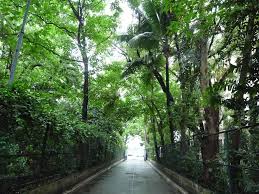
An alley of trees, UST Botanical Garden 
An order or several orders make up the Class. This has the standardized ending –opsida. For example, Angiospermopsida. The subclass ends in –idea as in Magnoliidae.

The Phylum (or Division) ends in –phyta as in Embryophyta. The Subphylum or Subdivision ends in –phytina as in Tracheophytina.

The Kingdom category ends in –bionta as in Chlorobionta (Green Plants).
Continued...